
 Philippine transport operators will soon have to abide by two new laws that aim to minimize road accidents, one of which requires that speed limiters be installed on public utility vehicles (PUVs) while the other prohibits and penalizes distracted driving.
Republic Act (RA) No. 10916, or the Road Speed Limiters Act of 2016, and RA 10913, or the Anti-Distracted Driving Act, both lapsed into law after inaction by former president Benigno Aquino III before he stepped down from office on June 30.
RA 10916 mandates that speed limiters must be placed on every PUV, including cargo trucks, closed vans, and tanker trucks.
Speed limiters are designed to reduce accidents by limiting the maximum speed of a vehicle by restricting fuel supply to the engine.
The bill, however, excludes taxicabs, tricycles, and jeepneys. After a year of implementation, the Department of Transportation (DOTr) can review whether these PUVs should also be fitted with speed limiters.
“I am very pleased with its enactment. I believe that it is long overdue especially with the number of accidents recorded in the past years because of speed driving,” Senator Joseph Victor Ejercito, who filed the Senate version of the bill, said.
“The new law shall cover all the public utility vehicles (PUVs). Once it is implemented, there will be mandatory installation of speed limiter device to limit the top speed of vehicles through the employment of mechanical, electronic or communications system or the combination of these systems or similar devices capable of performing the same function,” Ejercito added.
Under the law, those who are found to have tampered with the device will be meted with imprisonment of not less than six months but not more than three years.
Against distracted driving
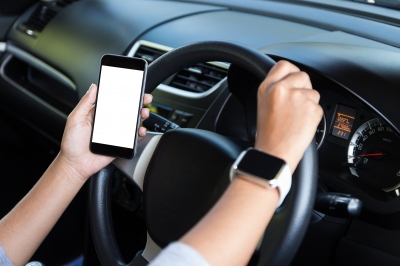
RA 10913, on the other hand, defines distracted driving as the use by a driver of a mobile phone, electronic device, or other equipment while his motor vehicle, whether private, public, or diplomatic, is running or temporarily stopped at a red light.
Operating a mobile phone through the hands-free function—which is the use of tools such as a speaker phone, earphones, and microphone to make and receive calls without the person having to hold the mobile phone—is not considered as distracted driving.
The policy states that as long as the mobile communication device or the hands-free device is placed in such a way that it does not interfere with the line of sight of the driver, its use does not violate RA 10913.
Using a mobile phone for emergency purposes is also regarded as an exemption.
Violators of the law will be slapped a P5,000 fine on first offense and a P10,000 penalty on second offense. On the third offense, a P15,000 fine and the suspension of the driver’s license for three months will be imposed, while fourth-time offenders will be slapped with a P20,000 fine and have their driver’s license revoked.
DOTr and its attached Land Transportation Office are the designated implementing agencies of the new law.