
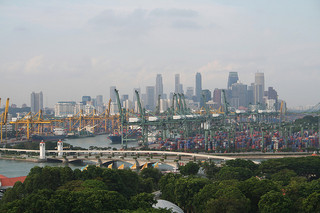
 World airfreight forecasts for 2013 have taken a more positive note as cargo markets rebounded strongly in November 2012, the International Air Transport Association (IATA) said.
After a 2.6 percent year-on-year decline in October, airfreight expanded by 1.6 percent in November over the same period in 2011.
Although some of this expansion reflects the impact of the Thai floods in 2011, the month-on-month increase of 2.4 percent is a positive sign, IATA said in a press statement.
“November brought some positive signs for air transport demand—particularly for air cargo,” said Tony Tyler, IATA’s director general and CEO.
Tyler cautioned that it was premature to think that air cargo markets were already bouncing back and regaining lost ground. Still, with the positive economic developments in the U.S. and an improvement in business confidence in recent months, “the conditions are aligning to see a return to growth in 2013,” he said.
Seasonally adjusted airfreight volumes have now risen back to mid-2012 levels after declines in the third quarter.
This year the association expects cargo volumes worldwide to grow 1.4 percent.
On the November performance of the regions, Asia-Pacific airlines accounted for almost half the rise in total volumes compared to October. The 2.4 percent rise in month-on-month volumes was in contrast to a 1.5 percent decline compared to November 2011. Freight capacity fell 2.8 percent over the period.
North American carriers increased freight traffic by 1.7 percent, and cut capacity by 0.6 percent, compared to November 2011.
European airlines’ year-on-year freight traffic was flat, and capacity grew just 0.3 percent.
Middle East carriers’ freight registered a strong year-on-year growth of 16 percent on just a 6.1 percent rise in capacity. Load factor surged to 46.7 percent, up 4 percentage points.
Latin American airlines’ freight grew 4.2 percent year-on-year, but capacity grew 8.5 percent.
African carriers grew freight volumes by 4.4 percent compared to November 2011. Although they kept the capacity increase to 3.6 percent, the load factor of 26.2 percent was still the weakest of all regions.
Photo: angeloangelo