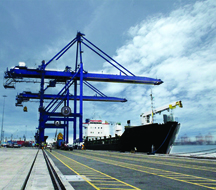
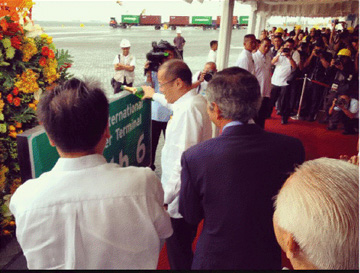
 Indonesia Port Corporation, formerly Pelindo II, announced it signed an agreement with seven government agencies at the Port of Tanjung Priok in north Jakarta implementing an electronic port clearance system supporting the Indonesia National Single Window (INSW) program.
The clearance system, called Inaportnet, will be implemented from July 1, 2012 and coordinated through the Office of Tanjung Priok Port Authority.
The application will encourage the smooth flow of goods at the port and is one of the port’s preparatory steps toward the realization of the ASEAN Single Window system, said Dana Amin, port operations director of PT Indonesia II.
Through Inaportnet, transactions “can all be done online,” ranging from the purchase of goods to the transfer of funds and processing of payments, added Amin.
The INSW is a government-mandated integrated system of port clearance in which data submission and processing are transacted online. It calls for the creation of two national electronic programs: Inaportnet, to be coordinated by the Directorate General of Sea Transportation, and TradeNet, for processing import and export permits, to be coordinated by the Directorate General of Customs and Excise.
Photo: IPC