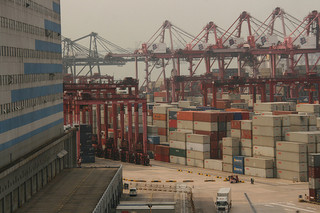
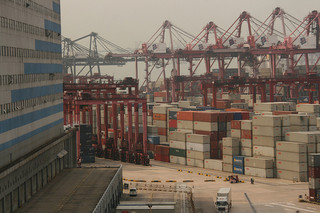
 The Port of Hong Kong processed 23.1 million 20-foot-equivalent units (TEUs) in 2012, a decrease of 5.3 percent year-over-year, the first time volume contracted since 2009.
According to the Hong Kong Marine Department, the world’s third busiest box port also handled fewer containers in December last year, with traffic down 11.3 percent to 1.9 million TEUs from the same month in 2011.
The negative performance was traced to a slowdown in trade on the Far East-Europe lanes and stronger competition from ports in southern China.
Hardest hit were the non-Kwai Tsing terminals, where throughput slid by 19.3 percent to 5.6 million TEUs in 2012 compared to 2011, and where December 2012 numbers dove to 430,000 TEUs from 619,000 TEUs in the same month of the preceding year.
Meanwhile, the Port of Shanghai, the world’s biggest container port, performed better, registering a 2.5 percent expansion in container volume to 32.5 million TEUs in 2012.
On the other hand, the Port of Singapore, the second biggest box port in the world, handled more than 30 million TEUs in 2012, a historic high, but not enough to dislodge Shanghai from the top post.
Photo: Rain Rannu