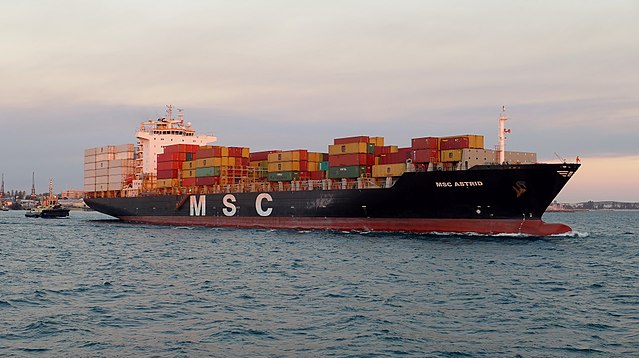
Average global freight rates fell to a 15-month low in April as prices on the Asia-Europe and Asia-North America trade lanes contracted, according to Drewry’s new online Container Freight Rate Insight, which was launched yesterday.
Drewry’s Global Freight Rate Index fell 12 percent in April to reach its lowest level since February 2012, when container shipping was still recovering from the last ocean carrier price war.
The Index, which is a weighted average of freight rates across the 600 trade routes covered by Drewry’s Container Freight Rate Insight, reached a new low of $2,065 per 40-foot container and has fallen 18 percent since the start of the year.
The index was depressed by a fall in pricing on the high-volume trades from Asia to both Europe and North America, where average rates fell 12 percent apiece across both trades in April.
Over half of the 600 trade routes covered by Drewry’s Container Freight Rate Insight recorded falling rates in April. And pricing is now below last year’s levels on over one-third of trade routes.
Pricing has fallen steadily on the Asia-Europe trade since the general rate increase of mid-March. This week the World Container Index benchmark from Shanghai to Rotterdam fell below $1,400 per 40-foot container for the first time since February 2012, shedding as much as 13 percent to $1,335 per 40-foot container.
Meanwhile, eastbound trans-Pacific pricing has retreated since the April 1 GRI, with Drewry’s benchmark rate between Hong Kong and Los Angeles falling below $2,000 per 40-foot container for the first time since March 2012 to $1,884 per 40-foot container.
“Drewry believes that until carriers take the necessary action to correct capacity, freight rates will remain under pressure,” warned Martin Dixon, research manager for freight rate benchmarking at Drewry. “We reiterate our view that carriers will need to remove at least two service strings from the Asia-Europe trade for rates to recover.”
Other trades contributing to the fall in Drewry’s Global Freight Rate Index were the westbound trans-Pacific and imports into South America, Africa and Oceania. There were precious few risers other than Middle East imports, South Asian exports, and northbound African rates.
“Cascading of surplus tonnage off overburdened East-West trades is depressing rates on once buoyant North-South and regional trades,” added Dixon.
Photo: Guysie