 The tie-ups currently occurring among big container shipping lines will prompt smaller operators to seek their own consolidation in order to remain in competition, according to Fitch Ratings.
It noted that the proposed merger of Hapag-Lloyd and CSAV, the U.S. regulatory approval of the P3 network, and the expansion of the CKYH alliance to include Evergreen “will all add to the pressure on smaller operators to consolidate.”
“In our view the tie-up of liners into alliances will intensify competition and put further pressure on smaller, less financially stable independent companies,” it explained further.
The ratings agency said persistent overcapacity, together with freight rates pressure, is responsible for the increased acceleration of alliances or mergers in the industry.
But it said forming alliances would not really address the fundamental supply-demand imbalance, as the container shipping sector remains highly fragmented and companies continue to order new vessels.
Instead, the mergers are expected to improve cost efficiency through lower slot costs, maximize capacity utilization, and enhance network coverage. Around 80 percent of the newbuild orders at end-2013 were for larger vessels, which are estimated to be up to 25 percent more cost efficient.
Still, the cost efficiency expected from these ships may not fully materialize yet since “their full cost efficiency can only be reached if utilization rates are high,” Fitch Ratings said.
The vessels are largely for deployment on the Asia-Europe trading lanes, where demand growth was soft in 2013, and likely improvement from 2014 may be insufficient to absorb the new capacity of the mega ships scheduled for delivery within the next two to three years.
Cost cuts are what will boost earnings for container ships. “We expect cost-cutting to remain key to the financial performance of container shipping companies in 2014,” it said.
“Rigorous cost containment helped by lower fuel prices were the main factors contributing to some improvement of the financial profiles of Maersk Line and Hapag-Lloyd in 2013, as average freight rates were down compared with 2012.”
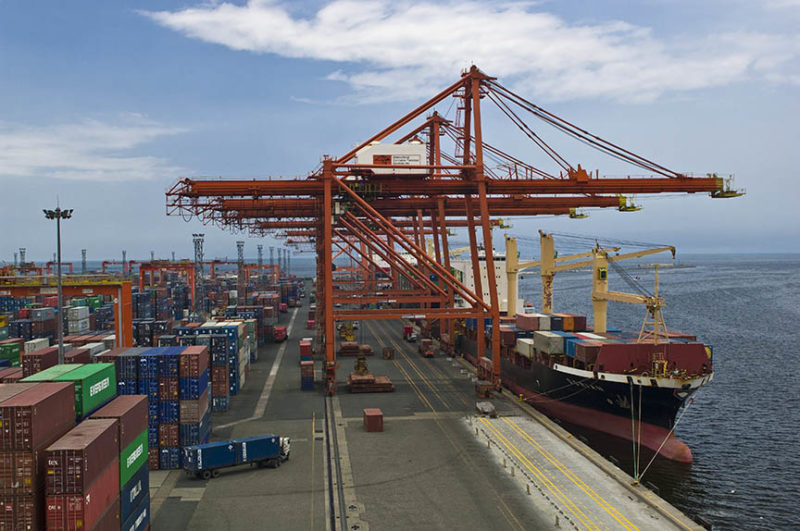
Photo: Roger Wollstadt