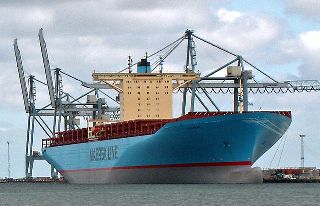
 The year 2014 saw global cellular fleet growth race ahead of world container traffic despite the delay in the delivery of some 100,000 TEUs, and Drewry forecasts a greater imbalance in 2015 as the tardy newbuilds arrive and add to the incoming orders for the year.
Drewry in its latest analysis said that total global fleet capacity grew 6% in 2014 year-over-year to 18.1 million TEUs against world container traffic of just 5.2%.
If all the scheduled newbuilds had arrived last year, the global fleet would have grown by a further 0.6 points to 6.6%, it said.
“Some 100,000 TEUs of new container ships scheduled for delivery in 2014 is estimated to have slipped into 2015. While this helped to narrow the gap between supply-demand last year it will only add to the supply pressure this year,” Drewry forecasts.
“Slippage is not uncommon as ship owners and yards re-negotiate delivery terms, and the sum for 2014 was lower than seen in recent years. However, that tonnage still has to be delivered at some point and delays merely push the problem down the road. This year the problem is particularly acute as the overhang in 2014 deliveries will be in addition to the huge 1.85 million TEUs already due to be added to the fleet.”
The appetite for new ULCVs (ultra-large container vessels) is making it much harder for carriers to match supply with demand, it added.
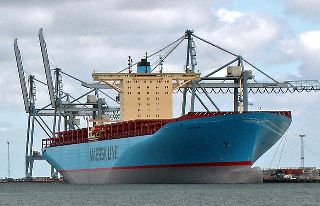
Drewry said the delivery of the 19,000-TEU CSCL Globe, the world’s largest box ship to date, highlights the current arms race among carriers for ever bigger, more fuel-efficient ships.
“The evolution of the biggest box ship crown has been staggeringly rapid with the 2005 holder the Gudrun Maersk now a veritable minnow at just 9,500 TEU. In fact, the CSCL Globe will itself soon have to pass on its mantle as new ships for MSC and UASC, both scheduled for early-2015 deliveries, are expected to have larger stated capacities. This hyper-inflation is matched at the aggregate level with the container cellular fleet nearly quadrupling since the start of the century.”
The maritime advisory service says the only way to stall the widening supply-demand gap is to further delay newbuild deliveries, together with increased dismantling of old ships.
“Scrapping of old ships along with further slippage of newbuilds into 2016 will lower the net addition to the fleet to around 1.35 million TEUs, but this would still represent the largest spike in annual capacity since 2007. Moreover, Drewry still sees the global fleet growth exceeding demand at 7.2% versus 5.3%.”
But it notes that restraint would be hard for carriers to exercise, since for them ordering bigger, more technologically advanced and fuel-efficient ships “is entirely sound as it lowers their slot costs, but it does present the wider industry with a huge problem in how to absorb the extra capacity.”
Photo: Niko-dk