
 Global air cargo has cleaved to a modest growth pattern, as data for March shows just a 1.6% rise in volumes, measured in freight tonne kilometers (FTKs), compared to a year ago, according to the International Air Transport Association (IATA).
The modest growth stands in sharp contrast to the strong 12.2% rise reported for February. February’s performance, however, was positively skewed by the combined impacts of the timing of the Lunar New Year and the labor dispute at U.S. West Coast seaports, said IATA.
Asia-Pacific carriers, in particular, found March a sheer letdown despite a reported growth of 2% compared to March 2014. This is a sharp drop from the 20.5% rate in February, when cargo airlines had a field day with the effects of the Chinese New Year and the U.S. West Coast labor crisis. Capacity expanded 3.9%.
“The air cargo industry is on a solid but unspectacular growth trend. And there is little evidence today that would point towards an acceleration as the year goes on,” said Tony Tyler, IATA’s director general and CEO.
The regional growth picture remains highly mixed. Latin American and European carriers reported market contractions, while Middle East carriers showed rapid growth.
European carriers declined 2.4% in March, compared to a year ago. The European Central Bank has been engaged in quantitative easing in an attempt to improve the economy and to offset weakness which persists as a result of the Russian sanctions. Capacity rose 2.3%.
North American airlines reported growth of 0.8% year-on-year. Economic indicators for employment, business, and consumer confidence are positive, which should point to stronger growth in the coming months. Capacity fell 3.1%.
Middle Eastern carriers saw FTKs grow by 10.6%, fuelled by network and capacity expansion. Trade is also increasing among Middle Eastern economies. Capacity grew 17.1%.
Latin American airlines reported a fall of 6.4% in year-on-year FTKs. The key economies of Brazil and Argentina continue to struggle, and a general increase in regional trade activity is yet to carry over into stronger airfreight demand. Capacity expanded 3.3%.
African airlines experienced a 2.4% increase in FTKs. The region has posted solid growth in Q1 2015, indicating that regional trade is holding up well, despite the under-performance of the Nigerian and South African economies. Capacity rose 0.5%.
Overall freight performance over the first quarter of the year indicates year-on-year growth of 5.3%, in line with general global economic trends and slightly higher than the 4.5% growth that was anticipated in IATA’s December outlook.
For the longer term, IATA called on governments to work in partnership to remove barriers to trade. “The growth in air cargo markets has shifted down a gear. World trade and air cargo are still growing, but only in line with industrial production. Removing barriers to trade in line with the World Trade Organization (WTO) Trade Facilitation Agreement (TFA) would deliver a much needed boost to the global economy,” said Tyler.
The World Economic Forum estimates that the WTO TFA could boost the global economy by as much as $1 trillion.
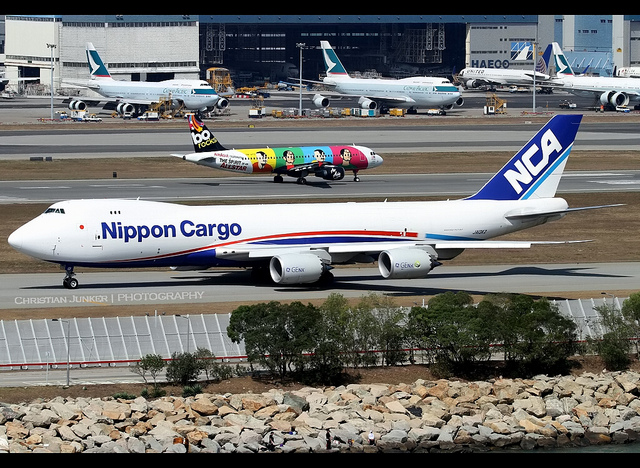
Photo: Christian Junker





