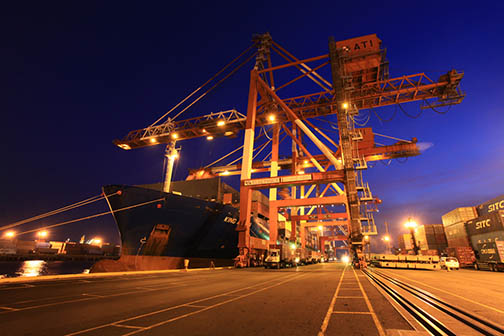

The Bureau of Customs (BOC) directed its officials to require operators of customs bonded warehouses (CBW), on-dock container yard/container freight stations (CY/CFS), arrastre operators, and other facilities that temporarily handle and store imported goods in their ports to apply for a license as CBW operators.
Atty. Agaton Teodoro Uvero, BOC deputy commissioner for the Assessment and Operations Coordinating Group (AOCG), through AOCG Memo No. 3-2015 dated May 14, said this ensures proper monitoring and control of imported cargoes.
In a separate emailed statement, Uvero said, “We are under instructions from the Commissioner to ensure that we continue our work to harmonize and simplify procedures on port operations, and to ensure that uniform and transparent rules are applied to all concerned.”
As part of ongoing reforms, Uvero said BOC has been reviewing rules, procedures, and standards applicable to all sea port and airport facilities used to temporarily store imported goods.
“What we have seen is that these rules, procedures, and standards are inconsistent and inadequate, and in many instances, they do not exist at all,” Uvero pointed out.
“To illustrate, warehouses at NAIA (Ninoy Aquino International Airport) have existing CBW licenses; albeit, actual operating standards and guidelines vary from one to another. For sea ports, many of these warehouses and similar facilities do not have existing CBW licenses,” Uvero said.
Another example, he added, is that off-dock CY/CFS have CBW licenses, while those on-dock (located in the ports) mostly don’t.
He explained that under tariff and customs laws and regulations, CBW licenses are required from warehouses, container yards, container freight stations, examination areas, and similar facilities used in the temporary handling and storage of imported goods not yet cleared with customs.
“These facilities also need to be under customs control and jurisdiction to ensure that imported goods are subject to customs formalities before being withdrawn for local consumption, or for delivery to economic zones, free ports, or CBWs,” Uvero said.
Based on international customs practices, a CBW refers to a designated physical warehouse under customs control allowed to store imported articles without payment of duties and taxes.
As of September last year, BOC said there were 96 CBW operators registered with the agency. But there were a total of 114 warehouses nationwide since some CBW operators manage more than one CBW.
One of the proposed projects early last year was to automate CBW operations and include them in BOC’s electronic-to-mobile system. – Roumina Pablo