 The moratorium on the implementation of the anti-overloading law as it applies to certain truck types may be extended for a year, according to an official of Confederation of Truckers Association of the Philippines (CTAP). The moratorium expired on July 31.
Truckers are once again requesting the Department of Public Works and Highways (DPWH) to extend the exemption of trucks under codes 12-2 and 12-3 from complying with the revised implementing rules and regulations (IRR) of Republic Act (RA) No. 8794 or “An Act Imposing a Motor Vehicle’s Charge on Owners of All Types of Vehicle and for other Purposes.”
CTAP director Alberto Suansing told PortCalls in a text message that he has relayed the truckers’ request to Public Works Secretary Rogelio Singson on July 30. The secretary, Suansing said, will “act favorably” on the request.
But as of press time, DPWH has yet to issue an advisory. Any moratorium has to be signed by both the secretaries of DPWH and Department of Transportation and Communications.
The suspension was first granted in 2013 in response to truckers’ request for more time to purchase equipment that will conform to the revised IRR of R.A. 8794.
CTAP vice president for external affairs Pepito Dino said a moratorium would be a great relief to truckers although “in truth, it is the importers/exporters that are not ready to comply with the requirements of the GVW (gross vehicle weight).”
He added, “We truckers are the only ones who transfer their cargo so whatever the weight of their cargoes is what we will be loading.”
CTAP earlier said that more than 50% of truck units nationwide belong to codes 12-2 and 12-3, and the only way for truckers to comply with the directive is if the allowable GVW for these codes is upgraded to 54,000 kilograms from 41,000 kilograms as specified in the revised IRR.
Teodorico Gervacio, president of Inland Haulers and Truckers Association, formerly the Integrated North Harbor Truckers Association, agreed that increasing the GVW is the only solution for truckers to comply with the law.
READ: PH truckers seek 5-year moratorium on proposed 15-year truck age limit
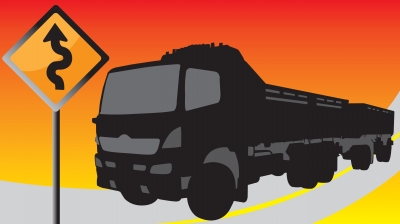
Code 12-2 trucks are semi-trailers with three axles on the towing trucks and two axles on the trailer, for a total of 18 wheels, while trucks with the 12-3 configuration are semi-trailers with three axles on the towing vehicle and three axles on the trailer, for a total of 22 wheels.
Under the revised IRR of R.A. 8794, trucks and trailers with these codes having loads exceeding the prescribed GVW of 41,500 kilograms and 42,000 kilograms, respectively, and load per axle of 13,500 kilograms are considered as overloaded and prohibited from travelling on any Philippine road.
An amount equivalent to 25% of the motor vehicles user’s charge in the motor vehicle registration filed with the Land Transportation Office will be imposed on overloaded trucks.
Secretary Singson has said that road assets get severely damaged from overloading. Some of the country’s bridges, such as Del Pan used by trucks going to and from Manila ports, are not designed to carry dead load or vehicles waiting idle on the structure, an often common occurrence on the bridge. – Roumina Pablo
Image courtesy of Naypong at FreeDigitalPhotos.net