
 Malaysia’s Prime Minister Datuk Seri Najib Tun Razak announced recently specific and proactive economic steps to deal with the country’s economic slowdown, including asking Malaysian companies based locally and abroad to repatriate profits and reinvest in the country.
With the fall of the ringgit and global oil prices, the government of Malaysia has introduced a number of measures intended to invigorate the national economy, according to state-run news agency Bernama.
These include restructuring and rescheduling the loans of small and medium enterprises (SMEs) and beefing up the working capital guarantee scheme with an additional MYR2 billion (US$474 million) channeled to other sectors besides the MYR5 billion set aside for the services sector.
He said SMEs can apply to restructure and reschedule their loans with financial institutions or avail themselves of Bank Negara Malaysia’s credit guarantee scheme.
Najib also said import duty exemption will be given to 90 tariff lines covering consumable spare parts and research apparatus used in the manufacturing sector until the global economy has recovered.
“This is in addition to the existing 319 tariff lines which have already been given an import duty exemption,” he said, adding that about 900 manufacturing companies will benefit in annual cost savings of between MYR100,000 and MYR500,000.
And to further stimulate domestic and foreign investments, the Domestic Investment Strategic Fund will be continued with an additional allocation of MYR1 billion under the 11th Malaysia Plan period.
He said this is aimed at accelerating the transition of local companies into high value-added, high-tech, knowledge-intensive, and innovation-based industries.
Additional measures to boost the capital economy will be announced in the 2016 Budget on October 23, he added. Najib continued that since the country recovered from the 1997-1998 Asian financial crisis, private companies and government-linked investment companies (GLICs) abroad have expanded and increased their investments, which have exceeded the amount of direct investments in the country.
As of June 2015, Malaysia was a net exporter of capital.
Investments made by GLICs overseas stood at MYR522 billion against foreign direct investment amounting to MYR477 billion.
The Prime Minister also said the government is reactivating ValueCap, which was formed in 2002 to support underperforming shares and which had proved to be effective in stabilizing the equity market.
The Prime Minister said among medium-term being measures being considered includes curbing dependence on foreign workers as they contributed to the cash outflow of MYR28 billion in 2014 and impeded local wage rate growth.
The government will continue to monitor and minimize the impact of the global economic uncertainty on the country’s economy, he added.
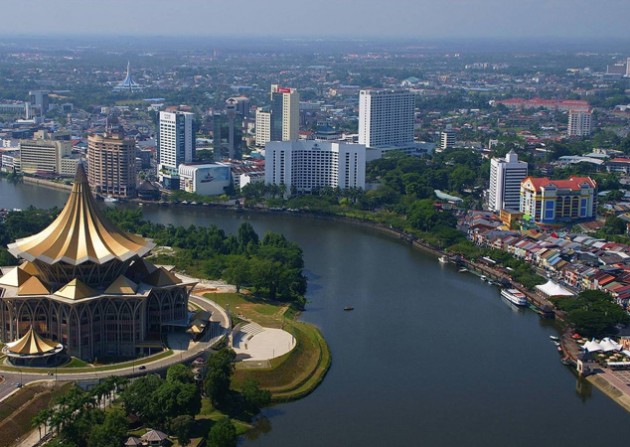
Photo: CoolCityCat