
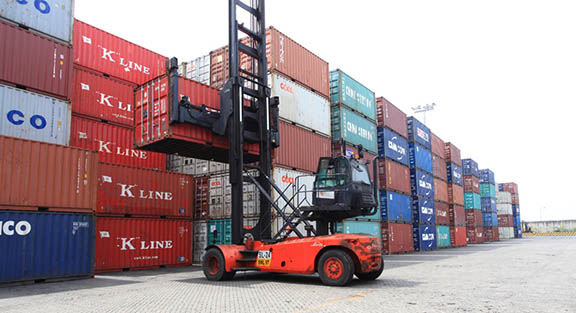
Philippine exports fell 3.9% in January 2016 due to lower earnings from all major commodity groups, according to the National Economic and Development Authority (NEDA).
The Philippine Statistics Authority, an attached agency of NEDA, reported that merchandise exports fell to US$4.2 billion in January 2016 from $4.4 billion recorded in the same month last year.
“The year 2016 is expected to be a challenging one for the export sector as the global economy faces sluggish economic recovery and uneven growth,” Socioeconomic and Planning Secretary Emmanuel F. Esguerra said in a statement.
“We see global trade growth remaining at a low level as the world copes with soft demand and lower commodity prices,” Esguerra, who is also NEDA director-general, added.
Reflecting sluggish global demand, most of the major trade-oriented East and Southeast Asian economies registered negative growth in January 2016, with Vietnam registering the least decline, and Singapore, the steepest decline.
Philippine exports of manufactured goods dropped by 2.2%, falling to $3.7 billion in January 2016 year-on-year.
“The fall in exports of manufactured products mirrors the general weakness of the global manufacturing sector. However, worth noting is the 5-percent increase in the exports of electronic products that registered its eighth consecutive month of positive growth in January,” Esguerra said.
Exports of agro-based products declined 7.6% to $289.1 million, dragged down by lower revenues from coconut products and fish products.
“We attribute this to the continued tightness in supply due to persistent dry weather. Also, lower export revenues for fish products can be partly traced to the lower supply of fish in Region XII,” the NEDA chief said.
Outbound sales of mineral products also dropped 27.8% to $145.3 million, while the export value of petroleum products declined 17.8% to $10 million due to persistent low oil prices.
Esguerra said that despite recent improvements, market and product concentration remain as challenges in increasing Philippine trade, and that trading with other Association of Southeast Asian Nations economies is still limited despite recently growing regional integration.