 The government of Malaysia is working on a master plan to develop the country’s troubled domestic shipping industry in anticipation of the intensifying competition coming from ultra large foreign vessels.
Deputy Ministry of Transport Abdul Aziz Kaprawi said the Shipping Industry Masterplan is now being formulated to address the challenges faced by the local industry and will be implemented sometime next year, according to a news report by Bernama.
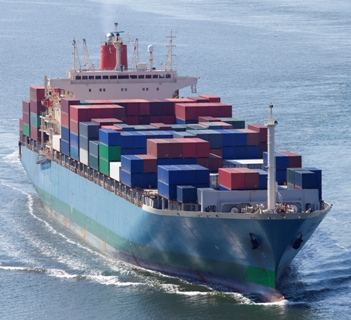
The local seaborne industry is in “sea sick” mode because of the softening of the country’s commodity exports, particularly oil and gas, and the increasing number of foreign ships with large capacities of up to 14,000 twenty-foot equivalent units (TEUs) that are competing with local carriers, he added.
He said domestic liners can’t effectively compete as their capacity is only between 3,000 and 4,000 TEUs.
“At the same time, we are also unable to compete with the lower transport cost offered by the international shipping companies,” he continued.
Data show that the number of ships registered in Malaysia has declined to 5,139 from the 5,148 recorded in 2013. Of this figure, the tally for full container ships has also fallen to 27 in 2014 as compared with 56 in 2010.
This has prompted the need for an action plan, which includes the expansion of major ports and development of talent in Malaysia.
Under the blueprint, Abdul Aziz said companies are also being encouraged to develop support industries, such as the ship repair sector that will cater to the requirements of large ships.
“At the same time, under the master plan, the government also plans to expand existing ports to ensure they meet the needs of mega-sized ships.”
The Transport Ministry has also forged a cooperation with the Malaysian Shipowners’ Association to ensure that development efforts for the industry can be implemented in a holistic manner.
“We expect to complete the master plan within two years,” Abdul Aziz added.
Reportedly, the master plan is recommending the participation of Malaysia’s fleet in the global energy and intra-ASEAN trade shipping, and the expansion of operations by local carriers in the domestic market through consolidation and exit from their non-core businesses.
Abdul Aziz said the constraint of limited human resources will be addressed by developing new academies dedicated to meeting the workforce requirements of the maritime sector.
Photo: Lofor