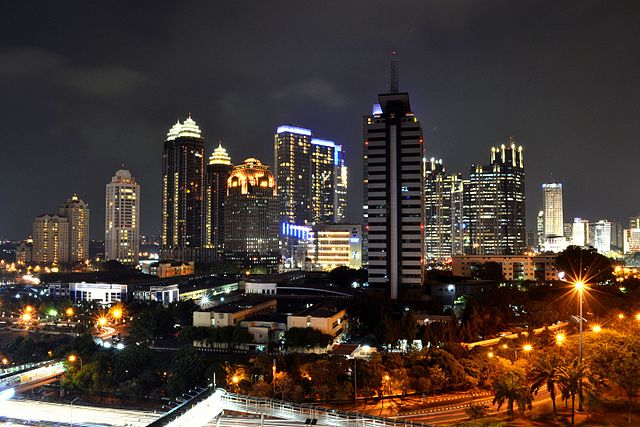
 Indonesia’s economy continues to prove resilient with a forecast GDP growth of 5.1% for 2016. But weaker-than-expected global economic expansion may moderate its growth recovery, according to a new World Bank report.
The World Bank recently lowered its growth projections for the world by half a percentage point than previously expected, to 2.4%.
Private consumption and public capital spending are projected to support the growth in 2016 of Southeast Asia’s largest economy, according to the June 2016 edition of the “Indonesia Economic Quarterly.”
“Prudent monetary policy, increased public investment in infrastructure, and policy reforms to improve the investment climate are helping Indonesia maintain growth in the order of 5.1 percent,” said Rodrigo Chaves, World Bank country director for Indonesia. “But the anemic global economy is limiting much needed investment and continued reforms would help Indonesia to buoy investor confidence.”
Increased private sector investment is essential for Indonesia, as pressures on public revenue may curtail the government’s plans for much more infrastructure investments, which have supported economic growth.
While private consumption growth remained resilient at 5% year-on-year, slowing growth in fixed investment due to reduced government spending has contributed to Indonesia’s real GDP growing at 4.9% year-on-year in the first quarter of 2016. Weak global demand continues to put pressure on exports.
Faced with the continued decline of the commodities sector, Indonesia can seize the opportunity to expand the manufacturing and services sector, said the report. Indonesia’s global share of manufacturing has stagnated at around 0.6% over the last 15 years.
“This is a critical opportunity for Indonesia to implement further reforms that will enhance the competitiveness of its manufacturing and services sectors, especially tourism,” said Ndiame Diop, World Bank lead economist for Indonesia.
Currently, Indonesia’s manufacturing exports are dominated by “low-tech” products, and operations are focused mainly on blending and assembly, making the country vulnerable to changes in a multinational corporation’s location strategy.
On the other hand, the Indonesian economy fared better when compared with predictions for other commodity-exporting countries, such as Malaysia (4.4%) and Thailand (2.5%), though it trailed the Philippines at 6.4% and Vietnam at 6.2%.
Photo: Muhammad Rasyid Prabowo