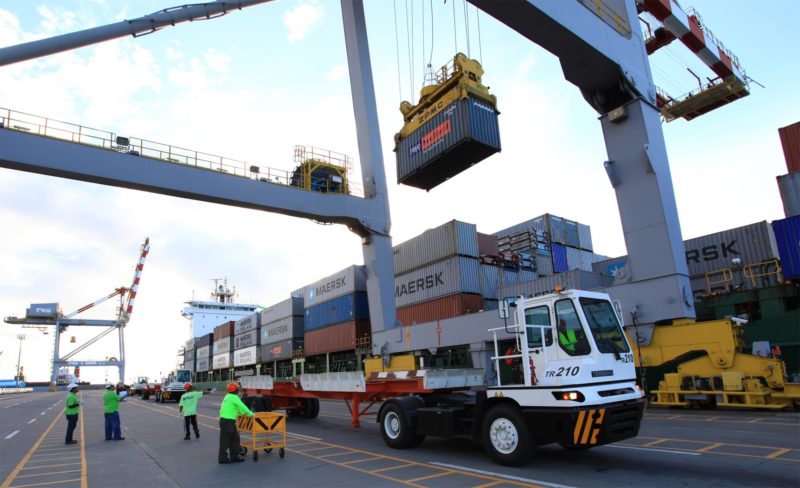
 The increase in local demand for capital and consumer goods drove imports growth by 39.3% year-on-year in May 2016, according to the National Economic and Development Authority (NEDA).
The Philippine Statistics Authority reported that the total payments for imported goods reached US$6.7 billion in May 2016 from $4.8 billion in the same period.
“The bullish performance of imports is a clear signal that our domestic economic conditions remain robust despite the weak global economy. With its current upward trend, we expect investments and consumption to drive growth for the rest of the year,” Socioeconomic Planning Secretary Ernesto Pernia said in a statement.
Among 11 selected Asian countries, only the Philippines posted a double-digit growth while other countries declined, NEDA noted.
“With the sluggish import activities in the region, we must focus on fast-tracking the country’s infrastructure development to support the growth of our economy and improve our absorptive capacity for investments,” Pernia said.
Imports of capital goods nearly doubled (up 99.9%) in May 2016, continuing on its double-digit growth path for the ninth consecutive month and the 16th consecutive month of positive growth.
Similarly, imports of consumer goods increased by 47.2% to $1.2 billion in May 2016 due to higher spending on both durable goods (92.4%) and non-durable goods (15.0%), driven by the higher demand for passenger cars and motorized cycles during the period.
“This is consistent with the findings of AmBisyon Natin 2040, which listed car ownership as among the aspirations of the Filipino people. But infrastructure, especially roads, must keep up. At the same time, public transport systems must be improved to expand people’s transport options, while we foster economic development in the countryside. Since these strategies take time to implement, we need everyone’s full cooperation towards efficient traffic management and strict enforcement of regulations,” Pernia, who is also NEDA Director-General, said.
He added that on the upside, the high domestic demand for vehicles can be a source of growth if firms located in the country can participate in the manufacture of the parts and components or even a complete car model.
China was still the Philippines’ top source of imports, with shipments from that country 65.7% in May 2016.
Image courtesy of khunaspix at FreeDigitalPhotos.net