
 The Development Academy of the Philippines (DAP) has started a program meant to cut by 25% by 2020 the regulatory burden of several industries in opening and operating a business enterprise in the country, including those engaged in land and sea transportation.
DAP began last week consultations for its Modernizing Government Regulations (MGR) program, which seeks to enhance the national regulatory infrastructure and develop mechanisms to help improve regulatory quality and coherence.
The program intends to make the Philippines more appealing to investors while encouraging competitiveness in the industry; it is aligned with the government’s push to streamline processing of documents and cut red tape.
Five industries are initially included in the program—transport (land and sea), tourism, food production and processing, and food service.
“We’d like to see regulations that are meaningful to the business sector,” DAP Productivity and Development Center vice president Arnel Abanto said during an MGR consultation on transportation held last September 21.
Cut regulatory burden by 25%
For the preliminary requirements of the initial five industries alone, there are already 36 regulatory agencies, excluding local government units, and 130 regulations involved.
For next year, DAP aims to expand the program to supply chain then value chains, and see what regulations and regulatory agencies are involved in the flow of goods and information in these fields.
Abanto said they plan to examine how regulatory functions are delivered by agencies and to create a management system that can be adopted “to effectively implement or carry out their regulatory function.
“Hopefully this will be a process-based, citizen-focused, and responsive management system.”
DAP is also aiming for “horizontal governance” where “business owners look at government as one government and not a government that operates in silos,” said Abanto.
He noted that in other countries, a national body coordinates all regulatory activities of all government agencies, from making regulations to implementing and reviewing them. In the Philippines, he observed that government agencies tend to act in silos, each requiring requirements common among them.
The plan is thus to have a single body to look into the country’s regulatory agencies and their regulations, as well as create an online portal providing the public access to information on how to open, operate, and close a business.
The MGR hopes to help create an environment conducive to the growth and development of business enterprises, and that will lessen costs in implementing regulations, all toward helping improve the country’s overall economy.
Asked for assurance that the MGR will be implemented, Abanto told PortCalls the program, for one, has assured funding as it is included in the General Appropriations Act. For another, it is being done in partnership with the Department of Budget and Management, National Economic and Development Authority (NEDA), Department of Trade and Industry, and National Competitiveness Council (NCC).
Abanto took note too of several government initiatives to reduce regulatory burden such as NCC’s Project Repeal, which aims to repeal, amend, or update obsolete or irrelevant government regulations. There is also NEDA’s Regulatory Impact Assessment, which is a tool that ensures the quality of regulations through a rigorous, well-defined, and evidence-based analysis.
The MGR public consultation in Manila tackled key findings from DAP’s survey of trucking and shipping companies, as well as its initial recommendations. – Roumina Pablo
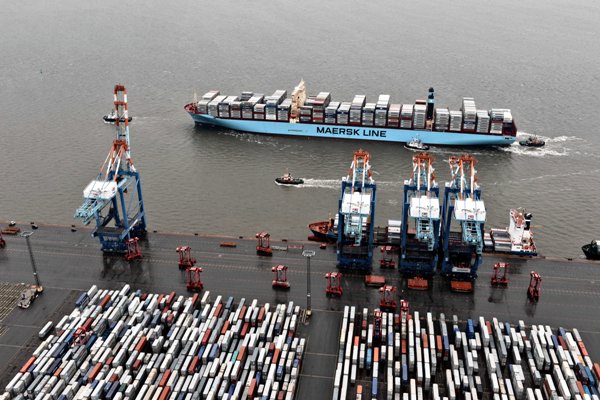
Image courtesy of khunaspix at FreeDigitalPhotos.net