
 FedEx Express Philippines said shipments containing power banks must be classified as batteries and prepared according to the new rules published by the International Air Transport Association (IATA).
In service news to its customers, FedEx said that effective January 1, 2017, shipments containing power banks must be classified as batteries, assigned as either UN 3480 lithium ion batteries or UN 3090 lithium metal batteries, and prepared in compliance with the 2017 IATA Lithium Battery Guidance Document published by IATA.
The new lithium battery guidance is based on provisions in the 2017-2018 Edition of the International Civil Aviation Organization Technical Instruction for the Safe Transport of Dangerous Goods by Air and the 58th Edition of the IATA Dangerous Goods Regulations (DGR).
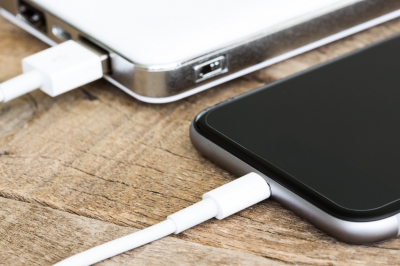
Power banks are portable devices containing a lithium battery or batteries with a circuit to control the power flow. They are designed to charge consumer devices such as mobile phones and tablets.
FedEx said power banks must therefore be tendered as fully regulated Section IA or IB UN 3480 lithium ion batteries or UN 3090 lithium metal batteries, whichever applies, for transport in the FedEx Express system.
“All UN 3090 power banks are subject to the FedEx Express pre-approval process,” the company said.
Examples of common types of power banks are the universal power bank, which comes in many sizes and configurations and can be tailored to the needs of the user and device typically with a mini or micro-USB socket for charging and with full-sized USB sockets for discharging; solar-charged power bank with photovoltaic panels, which can trickle-charge the internal battery when placed in sunlight; and battery phone case, which can be handy but has very narrow device compatibility.
In a separate notice, Fedex said operator variations has come into effect January 1, which will impact all its shipments containing stand-alone lithium metal batteries Section II (categorized as UN 3090) or stand-alone lithium ion batteries Section II (categorized as UN 3480). This is also pursuant to the new lithium battery rules published by IATA.
FedEx Express thus no longer accepts UN 3090 or UN 3480 lithium batteries that have been prepared as IATA Section II shipments. Instead, shipments containing these types of lithium batteries must be offered as fully regulated IATA Section I shipments (either IA or IB).
It noted that UN 3090 and UN 3480 lithium batteries Section IA/IB are fully regulated Class 9 Dangerous Goods and classified as inaccessible dangerous goods.
It reminded clients to “plan to make changes on how you classify, identify, package, mark, label, and document your lithium battery shipments.”
Image courtesy of blackzheep at FreeDigitalPhotos.net