The strong performance of the import sector contributed to the 6% increase in the Philippines’ cargo throughput for the first 10 months of 2016, the Philippine Ports Authority (PPA) said.
In a statement, PPA said the continued strong performance of the import sector is anchored on the high demand for overseas consumer products, including Christmas goods and foodstuff.
Passenger volume also improved due to the increasing cruise ship arrivals in the Philippines, bringing in more tourists and spurring a double-digit growth in foreign passage traffic.
Latest data from PPA showed that cargo throughput reached 198.441 million metric tons (mmt) for the 10-month period compared with the 187.209 mmt recorded in the same period of 2015.
Foreign cargo totalled 124.581 mmt, or 8.58% higher than the 114.732 mmt posted a year earlier, where import volume registered a 13.31% increase while exports posted a 3.24% hike.
Domestic cargoes inched up modestly with a 1.91% growth to 73.859 mmt from 72.476 mmt in 2015.
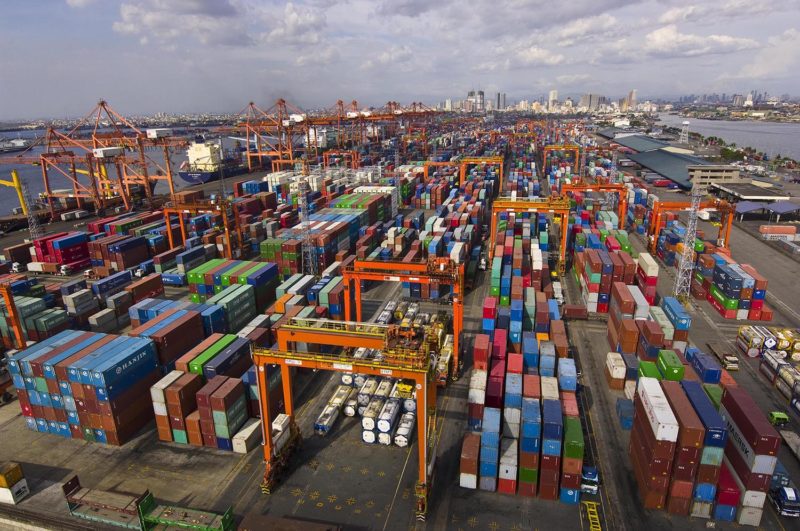
Container traffic also rose 8.46% to 5.182 million twenty-foot equivalent units (TEUs) for the period under review compared with the 4.778 million TEUs processed in 2015.
Foreign boxes posted an 11.06% hike in volume to 3.173 million TEUs from 2.857 million TEUs, with foreign containers contributing 1.607 million TEUs, or 13.13% higher than the 2015 figure. Export boxes totaled 1.566 million TEUs, a 9.02% improvement over the 1.436 million TEUs handled in the same 10-month period in 2015.
Similarly, domestic containerized traffic was higher after registering a 4.6% growth to 2.009 million TEUs from 1.920 million TEUs in 2015.
Among the ports registering positive growth were Manila North Harbor, Manila South Harbor, Bataan/Aurora, Agusan, Surigao, Zamboanga, Batangas, Limay, Cagayan de Oro, and Pulupandan.
As expected, Manila International Container Terminal handled the largest volume of containerized cargo for the period under review with 1.786 million TEUs, followed by Manila South Harbor with 866,674 TEUs, and Batangas with 127,160 TEUs. North Harbor continues to rank first in volume of domestic containerized cargo, handling 1.016 million TEUs during the period.
Total passengers embarking and disembarking at Philippine ports added up to 53.792 million. Domestic passengers accounted for 53.708 million, up 8.31%, while foreign passengers numbered 83,283, or a 22.36% hike from the 68,062 recorded as of end October 2015.
Nationwide shipcalls likewise went up, rising by 4.98% to 333,630 from 317,806 in 2015. Foreign-flag ships made a total of 9,713 calls, up 16.23%, while domestic shipcalls registered a 4.68% hike with 323,917 calls, higher than the 309,449 calls made in 2015. – Roumina Pablo