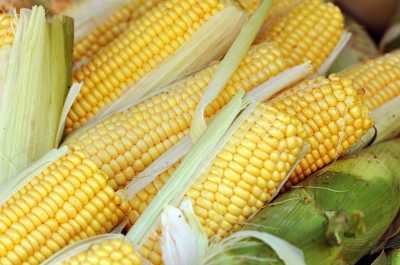

 The Philippines for the time is ready to export corn to neighboring countries in the region as corn harvests this year are seen to breach the domestic requirement of 5.6 million tons (MT), according to the Department of Agriculture (DA).
The country’s yellow and white corn harvest for 2017 is expected to hit 8.1 million metric tons in spite of the series of natural calamities that hit the country recently, including the seven-month El Niño episode, according to a report by agriculture assistant secretary Federico Laciste, who is also National Corn Program coordinator.
The production of cassava, which is lumped with corn in the animal feeds category, is seen to reach 570,000 metric tons, contributing further to stabilizing the corn and animal feeds supply in the Philippines.
With this, Agriculture Secretary Emmanuel Piñol will be asking President Rodrigo Duterte in a Cabinet meeting to direct the National Food Authority (NFA) to amend its rules that prohibit the export of corn until after the country doubles its corn production to 200%.
“This is the first time that the Philippines will achieve a 120% corn sufficiency,” Piñol noted.
Laciste, meanwhile, called the NFA rule regulating the export of corn (and rice) “unfair” and “unjust” to Filipino farmers because the entry of imported corn into the country has been liberalized.
For 2016, despite the seven-month El Niño situation that ravaged the country’s agricultural areas, the country harvested 7.5 million metric tons of both yellow and white corn, while cassava production reached 536,000 metric tons.
Corn production is expected to be boosted further this year with the recent approval and adoption of the Solar-Powered Irrigation System, based on the technical validation and recommendation of DA’s Central Agriculture and Fisheries Engineering Division, Piñol said.
In a meeting on January 18, the adoption of drip irrigation using the Solar-Powered Irrigation System and the use of hybrid corn seeds were identified as priority measures under the National Corn Program.
Irrigating corn fields, which is already being done in parts of Central Luzon, Cagayan Valley, and Ilocos Region has proven to be a tremendous boost to production per hectare, which now has a national average of 4.7 metric tons per harvest.
In the Central Luzon Region, DA regional director Andrew Villacorta reported that the biggest harvest posted in an irrigated corn field was an astounding 15 metric tons, which is higher by 10 tons than the national average production.
The country’s corn productivity, however, is affected by the very low prices of corn during harvest season owing mainly to the lack of post-harvest facilities like dryers.
The low prices have dampened farmers’ interest in corn farming and affected the growth of the sector, Piñol said.
The export of corn to such countries as Malaysia, Taiwan, and South Korea could bolster their prices n and encourage farmers to plant more, DA noted.
Piñol also directed the National Rice and Corn Program officials to focus their financial resources on providing farmers post-harvest facilities, including harvesters and dryers.
With the use of hybrid corn seeds, sufficient fertilizers, solar-powered irrigation system, and efficient post-harvest facilities, the country’s corn production could double during the next five years, Piñol stressed.
Image courtesy of Michelle Meiklejohn at FreeDigitalPhotos.net