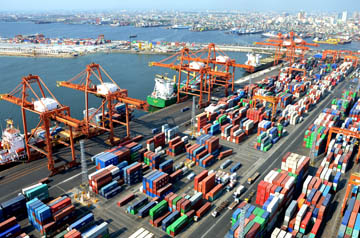
 Philippine trade grew 14.2% in January 2017, backed by the surge in export receipts from most of the country’s traditional markets, according to the National Economic and Development Authority (NEDA).
Based on a report by the Philippine Statistics Authority, total trade grew to US$12.6 billion in January 2017, with imports jumping 9.1% and exports soaring 22.5%.
Export receipts from nearly all major markets experienced growth—from China, (26.3%), South Korea (50.5%), ASEAN peers (19.3%), European Union (82.5%), and United States (16.5%).
“We are now riding the waves of economic growth in the region. As such, we must continue to push for innovation and infrastructure development to fuel our momentum and drive us to the forefront of the race,” Socioeconomic Planning Secretary Ernesto Pernia said in a statement.
Export earnings climbed to $5.1 billion in January 2017, propelled by growth in most commodities, led by forest products (266.2%), agro-based products (33.7%), and manufactures (23.1%).
In a separate statement, Trade Undersecretary Nora K. Terrado said, “We are positive that we will continue to drive growth and recovery for the export sector as we increase our efforts in promoting Philippine industries throughout the year in various key markets. We take the consistent growth since the last quarter of 2016 as a sign for positive outlook in the coming months.”
However, import payments decelerated to $7.4 billion due to the decrease in demand for capital goods (-11.0%), which offset the gains of consumer goods (22.8%), raw materials and intermediate goods (15.2%), and mineral fuels and lubricants (42.7%).
“We must support our fast-growing economy by strengthening our production capability and linkages, particularly in agriculture and manufacturing, to help us meet both internal and external demands,” Pernia said.
Like the Philippines, all Asian economies posted positive trade figures. The country recorded the third highest year-on-year growth, behind Indonesia (21.1%) and Singapore (19.9%), and ahead of Malaysia (12.0%) and China (11.4%).
“This is a signal that our efforts in forging better relations with our Asian neighbors and the EU are finally paying off,” said Pernia.
However, risks to global growth and trade remain with U.S. protectionist policies that may hamper global recovery, as countermeasures are expected to be imposed by its trading partners.
“Aside from increasing our attractiveness and competitiveness through economic reforms, we need to diversify our market and take advantage of our existing multi-lateral and bilateral trade agreements to expand opportunities for our producers,” Pernia added.
Image courtesy of Stuart Miles at FreeDigitalPhotos.net