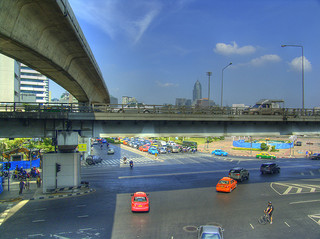

 Passing the Traffic Crisis Act and the Comprehensive Tax Reform Program (CTRP) is one of the identified common priorities of Philippine Congress and the Office of the President.
Bills that aim to address the pressing traffic crisis in urban areas and reform the country’s taxation system form part of 10 priority bills that the legislative and executive branches have agreed to work on in the coming months.
This was confirmed during the four-hour consultative meeting between officials of the Senate and the Presidential Legislative Liaison Office (PLLO) on March 21.
Senate officials led by Senate secretary Lutgardo Barbo, chiefs-of-staff of the senators, and Senate Secretariat officers represented the Upper Chamber during the event, while the PLLO contingent was led by PLLO secretary Adelino Sitoy and PLLO undersecretary Antonio Gallardo.
Given Congress’ limited schedule, both panels agreed to enhance cooperation in order to secure the more efficient passage of pending legislation, according to Gallardo.
He noted that the two houses only have around 14 calendar days to meet legislative targets before they adjourn in June. The Senate and Lower House are currently on a two-month break, resuming sessions in May.
“I would say that the task ahead of us is quite challenging. But as long as we work together, the challenge can be answered adequately,” Sitoy said.
The Lower House version of the Traffic Crisis Act has already been approved “in principle” at the committee level, while a consolidated version of several bills in the Senate is up for second reading.
The Senate version, Senate Bill No. 1284, will provide President Rodrigo Duterte emergency or special powers to prescribe urgent and necessary measures to address traffic woes in Metro Manila and other urban areas.
The Lower House version, or House Bill No. 4334, only focuses on the crisis in the land transportation system. It is also not founded on the concept of emergency powers, but merely seeks to harmonize and organize various traffic policies of the national government and local government units.
Twelve bills on various amendments to the country’s taxation system have been filed with the Senate. In the Lower House, Package One of the CTRP has been approved “in principle” by the Ways and Means Committee.
The other pending bills on the priority list are the Occupational Safety and Health Hazards Compliance Act, National Mental Health Act, Utilization of the Coconut Levy Fund, Unified National Identification System Act, Condonation of Land Amortization and Arrears on Interest Payment, Con-current Joint Congress Resolution on the Revised Base Pay Schedule of Military and Uniform Personnel, Pension Reform for Uniformed Personnel, and Security of Tenure Bill.
Earlier, the President identified the 55 priority bills of his legislative agenda, while Congress listed 39 “common legislative priorities.”
Image courtesy of stockdevil at FreeDigitalPhotos.net