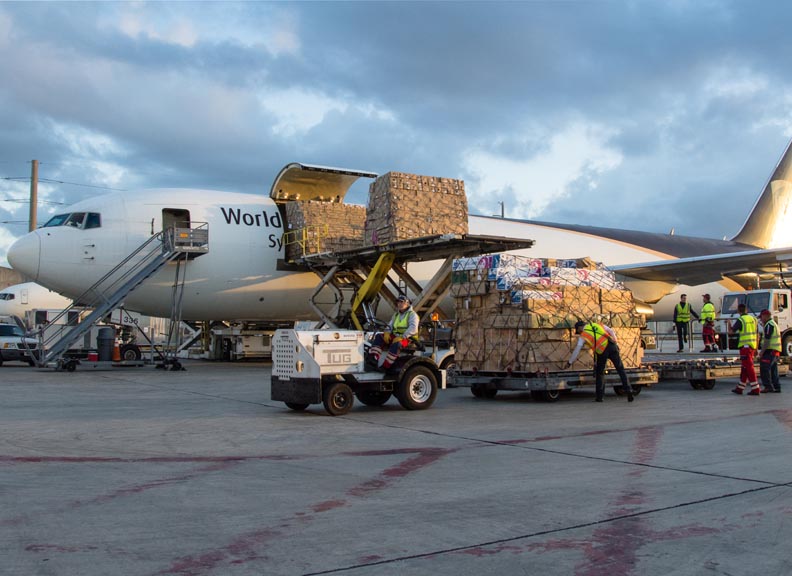

 International supply chain company UPS said it has expanded its global dangerous goods shipping program by adding more than 400 new commodities that can be accepted in its global air network, and more than 300 products across its ground network in Europe. The company also increased the allowable quantity of select dangerous goods accepted for shipment.
It added that UPS can now transport this expanded lineup of goods between 36 countries and territories in North America, Europe, and Asia.
It noted that there is growing demand from companies in a variety of industries to ship products that are classified as dangerous goods. For example, healthcare companies need to transport chemicals to clean laboratory equipment. Industrial manufacturing companies transport paint, compressed gases, adhesives and batteries, among other items.
“UPS helps companies meet strict and often complex requirements when shipping dangerous goods,” said Teresa Finley, UPS chief marketing officer. “Now we can meet our customers’ expanded needs for a one-stop solution to ship both conventional and dangerous goods.”
UPS said it has technology applications to simplify shipping packages that meet guidelines issued by the International Air Transport Association, the U.S. Department of Transportation, the European Dangerous Goods Accord, and the International Civil Aviation Organization, a specialized agency of the United Nations.
The list of countries where dangerous goods can be shipped by UPS includes Andorra, Austria, Belgium, Canada, Czech Republic, Denmark, Dominican Republic, Finland, France, Germany, Greece, Hong Kong, Hungary, and Ireland.
Also on the list are Italy, Japan, Liechtenstein, Luxembourg, Malaysia, Monaco, Netherlands, Norway, Philippines, Poland, Portugal, Puerto Rico, San Marino, Singapore, South Korea, Spain, Sweden, Switzerland, Taiwan, United Kingdom, United States, and Vatican City.





