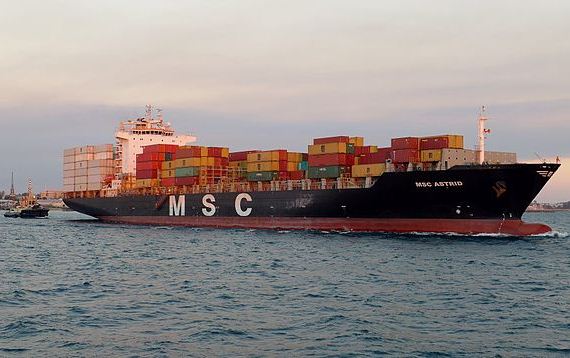
 Container shipping companies have benefited from a modest increase in freight rates since the start of the year, but a sustainable recovery in the container market will only be achieved by reaching a viable supply/demand balance through capacity cuts, Fitch Ratings says.
Container transport volumes outstripped capacity growth in 2016 for the first time since 2010-2011, helped by a higher rate of vessel scrapping and delayed deliveries.
“We expect this to be only a temporary reversal, as net capacity growth will accelerate in 2017 and 2018, exceeding demand growth and contributing to increased overcapacity,” said the credit rating agency.
“The relatively strong 1Q17 performance suggests there is some upside to our demand forecasts, but we believe this would lead to lower scrappings and the return of idled fleet into employment, rather than a better supply/demand balance.”
A moderate recovery in freight rates if maintained throughout the year should support an improvement in container shipping companies’ credit metrics in 2017, but the performance will vary significantly, it continued.
Smaller, less diversified companies such as Yang Ming may struggle to achieve positive EBIT, while companies with scale, geographic diversity, and a record of successful cost-cutting, such as CMA CGM and COSCO, are likely to perform comparatively well.
Higher fuel prices could offset some gains from the rate increase. There is also likely to be a limited impact on the sector from the Qatar diplomatic dispute, to which the combined Hapag-Lloyd/United Arab Shipping Company has the highest exposure, said the report.
While cost-cutting can provide financial support, market equilibrium is needed for a sustainable improvement in financials, said Fitch Ratings.
“We see M&A deals, rather than alliances, as the most likely route to restoring the supply/demand balance in container shipping. This is because alliances have limited ability to manage networks and capacity as well as optimise cost structure, while M&A can lead to more prudent capacity management,” it stated.
This trend is underway, it added, with the top-five container shipping companies consolidating their market position through mergers and acquisitions. Their market share is likely to be around 57% in 2018, up from 45% in 2016 and 27% in 1996.
“But many of the remaining smaller companies have weak credit metrics. Their ability to remain afloat will largely depend on freight rates, which are volatile, and the banks’ willingness to provide funding,” said the report.
Photo: Bahnfrend