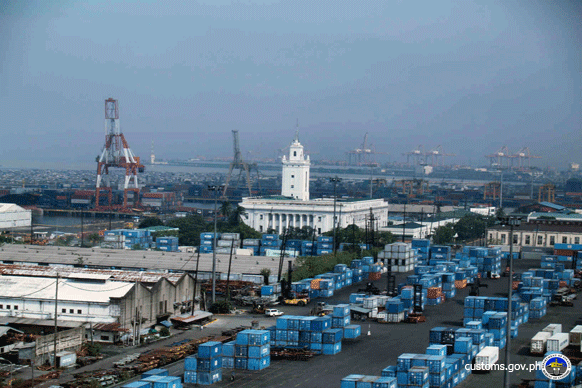


The Bureau of Customs (BOC) at the Port of Subic has just opened a one-stop shop at Tipo Gate, the main entrance to the terminal, in a bid to fast-track documentary transactions at the port.
Port operator Subic Bay International Terminal Corp. (SBITC) in an advisory said the new one-stop shop supports the BOC-Port of Subic’s thrust to promote ease of doing business.
The idea for the new one-stop shop at Tipo derives from the same facility at the Subic Port New Container Terminal 1, where BOC officers and the Subic Bay Metropolitan Authority (SBMA) Seaport Department are holding office to expedite processing of documents. SBITC earlier said this setup allows the seamless flow of transactions as port users no longer have to go to different areas in Subic to process their documents.
The one-stop shop at Tipo Gate houses officers from Customs Enforcement and Customs Clearance as well as X-ray personnel.
“This will speed up processing and releasing of documents and provide availability of BOC services at the Tipo Gate at any given time,” SBITC said.
Aside from the one-stop shops, Subic Port now also has a container freight station with three consolidators providing consolidation and de-consolidation services for less-than-container load shipments of exporters and importers.
Cargo volumes at Subic Port have been on the rise since 2014. In 2015, containerized cargoes handled jumped to 123,510 twenty-foot equivalent units (TEUs), a 60% increase from 77,177 TEUs in 2014. For non-containerized cargoes, 7.5 million metric tons of goods were shipped through the port last year, 24% higher than the 6.1 million metric tons recorded for the previous year.
At the same time, shipping lines calling the port have increased to 12—APL, Wan Hai Lines, Maersk Line, MCC Transport, Swire Shipping, NYK, K Line, SITC, Samudera Shipping Line, Sinotrans, Evergreen, and Inter-Asia Line.
Subic port’s NCT 1 and NCT 2 have a combined container yard space of 11.14 hectares and a total annual capacity of 600,000 TEUs. – Roumina Pablo