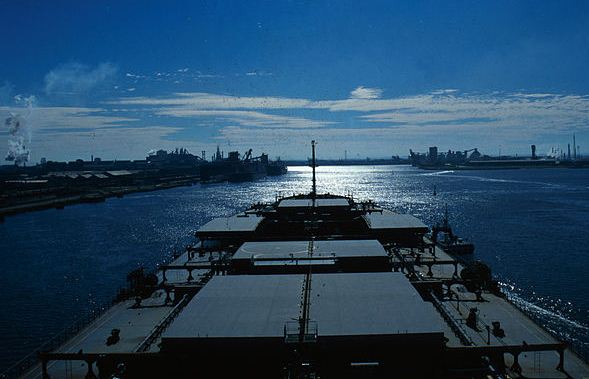
 The International Maritime Organization announced that Jamaica and Malta have become the latest states to sign up to IMO’s Ballast Water Management Convention, which entered into force on September 8, 2017.
Malta acceded to the BWM Convention earlier this month, while Jamaica deposited its instrument of accession on September 11.
IMO’s BWM Convention is the international treaty requiring ships to manage their ballast water to help stop the spread of invasive aquatic species across the globe. The convention now has a total of 65 signatories representing 73.92% of the world’s merchant fleet tonnage.
The convention was adopted in 2004 by the IMO, the United Nations specialized agency responsible for developing global standards for ship safety and security and for protecting the marine environment and the atmosphere from any harmful impacts of shipping.
“This is a landmark step towards halting the spread of invasive aquatic species, which can cause havoc for local ecosystems, affect biodiversity and lead to substantial economic loss,” IMO Secretary-General Kitack Lim had said on September 8 to mark the entry into force of the treaty.
He added, “The entry into force of the Ballast Water Management Convention will not only minimize the risk of invasions by alien species via ballast water, it will also provide a global level playing field for international shipping, providing clear and robust standards for the management of ballast water on ships.”
Ballast water is routinely taken on by ships for stability and structural integrity. It can contain thousands of aquatic microbes, algae, and animals, which are then carried across the world’s oceans and released into ecosystems where they are not native.
Untreated ballast water released at a ship’s destination could potentially introduce new invasive aquatic species. Expanded ship trade and traffic volume over the last few decades has increased the likelihood of invasive species being released. Hundreds of invasions have already taken place, sometimes with devastating consequences for the local ecosystem, economy, and infrastructure.
The BWM Convention requires all ships in international trade to manage their ballast water and sediments, including by exchanging their ballast water or treating it using an approved ballast water management system. All ships must carry a ballast water record book and an International Ballast Water Management Certificate.
Photo: tjdatsrt