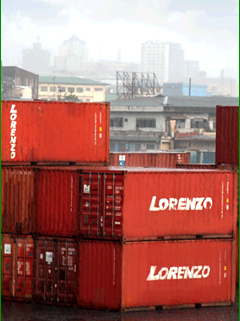


The Bureau of Customs (BOC) has extended to the Manila International Container Port (MICP) the implementation of a queueing system for its Formal Entry Division (FED).
The first-come-first-served queuing system was first introduced at the Port of Manila last week; it is designed to prevent examiners and customs brokers from colluding or resorting to bribery as a way to fast-track processing of shipments.
Customs Commissioner Isidro Lapeña announced the system’s implementation at MICP on November 4 during the 27th National Convention of the Chamber of Customs Brokers, Inc. in Davao City and which PortCalls attended.
Being implemented is a load balancing system for examiners, which means that whoever is present will be given an assignment. This means any examiner may be assigned to any shipment, eliminating the chance for collusion between examiners and customs brokers and importers.
This, the customs chief said, decreases the processing time to process shipments with FED.
MICP district collector Atty. Ruby Alameda, in a phone interview with PortCalls on November 7, said the queuing system is being implemented manually but that BOC’s Management Information System and Technology Group (MISTG) is fast tracking installation of computers.
Status verification
MICP-MISTG site manager Winlove Azurin said six computers are ready and can be used by next week; three will be used by the Entry Processing Unit and the other three will be for the Status Verification System (SVS).
SVS entails placing computer kiosks in the brokers’ lounge to allow customs brokers or their representatives to check the status of their shipments.
Under the SVS, users just need to input the shipment’s entry number to check for cargo status and missing documents for submission. BOC noted this will help processors determine if they are being asked to submit unnecessary requirements. With the SVS, processors will also no longer have to chase examiners to get shipment updates.
For now users can check consumption entries, but BOC has plans to add other types of entries to the system later.
Lapeña earlier said a corresponding memorandum order will be issued once the operational testing of the queuing system is done. The new system will also be rolled out in other ports.
The queuing system replaces 15 sections of the FED, which were removed to lessen face-to- face transactions and familiarity between customs examiners and appraisers, customs brokers, and processors, and to prevent any possible collusion. – Roumina Pablo
Image courtesy of zeeclock at FreeDigitalPhotos.net