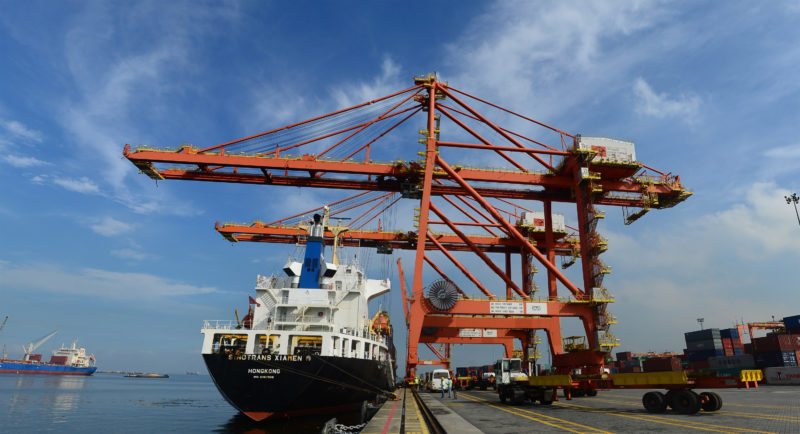
More shipping lines operating in the Philippines are now connected to GoFast, the web-based system of the Association of International Shipping Lines (AISL) that organizes the return of empty containers to depots.
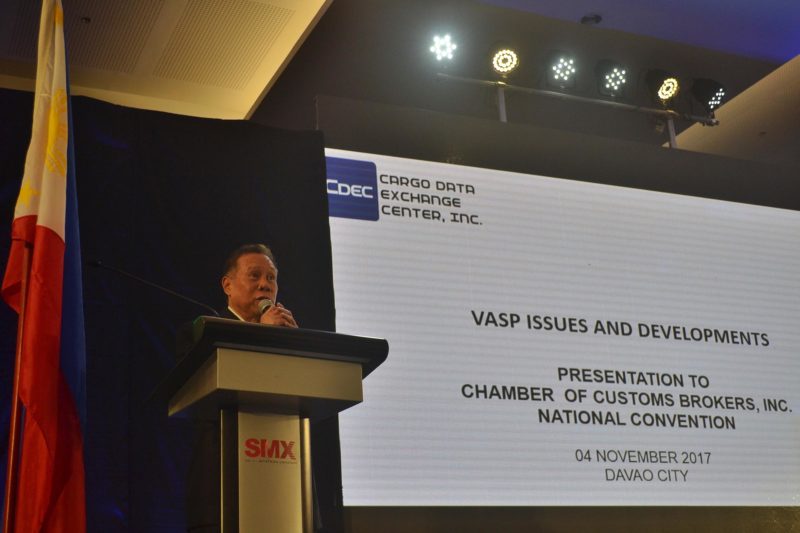
As of September, 23 shipping lines are connected in varying phases to GoFast, while one more has agreed to use the system by December 2017, according to Leo Morada, Cargo Data Exchange Center, Inc. (CDEC) chief executive officer, who spoke during a presentation at the recent Chamber of Customs Brokers, Inc. 27th National Convention in Davao City.
GoFast is an online reservation system that interconnects stakeholders directly involved in empty-container returns to depots, including shipping lines, truckers, customs brokers, and depots. GoFast transactions currently cover only the shipments of participating shipping lines that go through Manila South Harbor and the Manila International Container Terminal (MICT).
Last May CDEC, tapped by AISL to develop and implement GoFast, added another feature to the system to allow for the online payment of equipment insurance. This eliminates the need for customs brokers or their representatives to go to AISL offices at ports in order to pay the insurance.
Morada said the project seeks to reduce face-to-face transactions that may lead to corrupt activities.
GoFast is also connected to the system of International Container Terminal Services, Inc., allowing the delivery order from GoFast to be accepted as web container release order and eliminating the need to go to the port. Customs brokers/processors can just proceed to the billing system and pay the arrastre. Morada noted that this has reduced the paper trail, cutting transport costs for processors needing to travel to different sites to pay.
Morada said they “expect momentum for connectivity” sometime next month, with the system possibly being taken up by port operator Asian Terminals Inc., which operates Manila South Harbor and Batangas Port.
CDEC is also assessing when GoFast can be implemented in other areas, with Subic, Cebu, and Davao as the next targets.
Morada said GoFast is being implemented in three phases: equipment insurance payment; equipment insurance payment and generation and issuance of delivery orders; and linking up of container depots so they can use and issue the equipment interchange receipt.
To use GoFast, importers and customs brokers must secure an account and acquire account credentials, top up to fund the prepaid account, and print the AISL equipment insurance certificate. Clients may contact CDEC for support and training on how to use the system.
Morada clarified that AISL GoFast is not a value-added service provider system, and that it may be used by all customs brokers and their importers. – Text and photo by Roumina Pablo