

Lorenzo Shipping Corp. (LSC) has narrowed its net loss for the first nine months of 2017 to P119.531 million from P249.159 million in the same period last year, as the Philippine carrier’s turnaround plan starts to reap benefits.
Total revenues for the nine-month period this year amounted to P1.665 billion, 0.4% lower than the P1.672 billion revenue reported in the same period in 2016, LSC’s disclosure to the Philippine Stock Exchange stated.
Despite the sale of M/V Lorcon Cagayan in May 2016, volumes handled by the company for the months January-September 2017 increased 11% through improved utilization and routing of vessels, and co-loading arrangements with selected carriers. Reliability of vessels improved by 72%, thanks to more focus on maintenance and crew competency and training. Industry vessel capacity, however, remains high as compared to demand, which generally affected freight, LSC noted.
The carrier ended with gross profit of P0.9 million, an improvement of P2.8 million from the negative gross profit of P1.9 million in the same period of 2016. Direct cost dropped by P10 million, amounting to P1.7 billion for the first nine months of 2017. Average daily direct vessel expenses per vessel improved by 9% compared to the same period in 2016, while trucking expenses also went down by 25%.
Fuel expenses, however, shot up by 42% with the 41% increase in price per liter of fuel and diesel oil. Cost of repair of land-based equipment and container vans also accelerated in 2017 as the company strove to make operations more reliable.
With the turnaround plan “already starting to reap benefits,” LSC said the same measure will be carried through while preparations are ongoing to capitalize on the peak months of October to December 2017. The domestic carrier has been reporting losses since 2015, but narrowing them this year.
Turnaround measures include improvement in vessel and service reliability through enhanced partnership with selected carriers to achieve utmost flexibility, especially in cases of excess volumes or service disruptions.
The carrier also continues to emphasize maximizing vessel capacity, especially for northbound volumes, through a better pricing scheme.
Further, the company is working to significantly reduce operating costs for trucking, terminal, lift-on, lift-off, and container van rental through a more focused and agile organization and the use of appropriate technology.
The company is also implementing profit leakage management programs, focusing on claims reduction and an improved billing and collection cycle through people, process, and technology intervention.
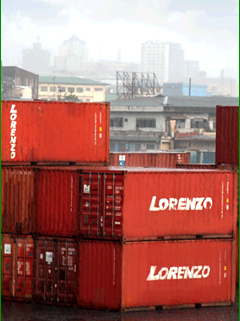
Photo from www.lorenzoshipping.com