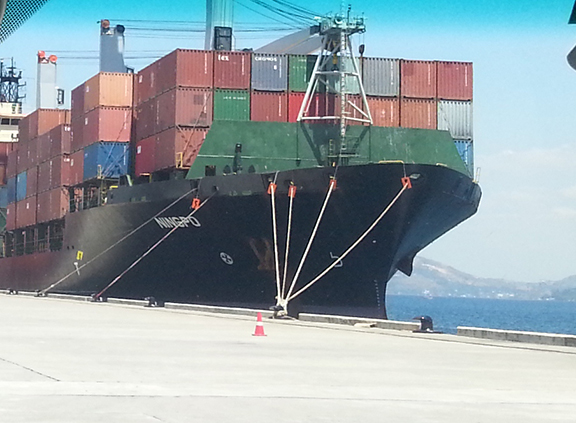
Agriculture Secretary Emmanuel Piñol is reiterating his challenge to Filipino shipbuilders to submit designs and cost estimates for building cargo vessels that can handle the country’s food shipments.
Piñol, in a statement, said that “for a country of 7,500 plus islands, the Philippines has one of the most outdated sea transport systems and facilities.”
He said the availability of cargo vessels to ferry food commodities from the islands to the urban centers like Cebu and Metro Manila “is so scarce that it is more expensive to ship bananas from Mindanao to Manila than from Davao to Japan.”
He said banana farmers from Mindanao “have to literally beg for space in the cargo vessels to ship their bananas to Metro Manila,” Piñol said, adding that “a delay of two or three days would already cause massive losses to them.”
This is why the agriculture chief two months ago challenged Filipino shipbuilders to design cargo ships that could ferry food commodities from different islands to urban centers.
Piñol said the design and cost estimates should be submitted before the end of the first quarter of 2018 so the funding proposal could be included in the 2019 budget of the Department of Agriculture (DA) and the Bureau of Fisheries and Aquatic Resources (BFAR).
New BFAR vessels
BFAR has its own fleet of ships, and will soon have two new multi-mission offshore vessels made by Filipino engineers and shipbuilders at the shipyards of Navotas by December this year.
Built by Josefa Slipways, Inc. under the strict supervision of international monitors to conform with established standards for sea vessels, each of the vessels cost about P250 million. Piñol said ships of the same size, measuring 50.5 meters and built in other countries, are estimated to cost about P750 million each.
Piñol said the types of vessels needed to easily transport food products from the production areas to the market include a refrigerated vessel that can carry fish and other marine products, and a multi-purpose vessel that can load refrigerated vans containing vegetables and meat products, with enough space to accommodate containers with fruits.
“These vessels would very well serve the purpose in the realization of the vision of President Rody Duterte to establish Regional Food Terminals which would consolidate food products from production areas to be brought to the major urban centers for distribution,” Piñol said.
Image courtesy of atibodyphoto at FreeDigitalPhotos.net