 A total of 180 incidents of piracy and armed robbery against ships were reported to the International Chamber of Commerce’s International Maritime Bureau (IMB) in 2017.
According to the latest IMB report, 2017 has the lowest annual number of incidents recorded since 1995, when 188 reports were received.
In 2017, 136 vessels were boarded, while there were 22 attempted attacks, 16 vessels fired upon, and six vessels hijacked.
In 15 separate incidents, 91 crew members were taken hostage, and 75 were kidnapped from their vessels in 13 other incidents. Three crew members were killed in 2017 and six injured.
In 2016, a total of 191 incidents were reported, with 150 vessels boarded and 151 crew members taken hostage.
Beyond the global figures, the report underlined several takeaways from the past year.
One is that danger persists in the Gulf of Guinea, the maritime area located in the western part of the African continent.
In 2017, there were 36 reported incidents with no vessels hijacked in the area, and 10 incidents of kidnapping involving 65 crew members in or around Nigerian waters. Globally, 16 vessels were reportedly fired upon—including seven in the Gulf of Guinea.
“Although the number of attacks is down this year in comparison with last year, the Gulf of Guinea and the waters around Nigeria remain a threat to seafarers. The Nigerian authorities have intervened in a number of incidents helping to prevent incidents from escalating,” said Pottengal Mukundan, director of IMB.
Another takeaway is that Somali pirates remain a major threat.
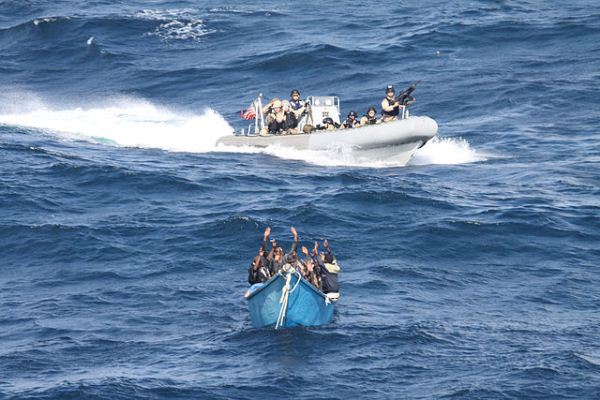
Nine incidents were recorded off Somalia in 2017, up from two in 2016. In November, a container ship was attacked by armed pirates about 280 nautical miles east of Mogadishu in Somalia. The pirates, unable to board the vessel due to the ship’s evasive maneuvering, fired two RPG rockets, both of which missed, before retreating.
Six Somali pirates were subsequently detained by the European Union Naval Force, transferred to the Seychelles, and charged with “committing an act of piracy” where they face up to 30 years’ imprisonment if convicted.
“This dramatic incident, alongside our 2017 figures, demonstrates that Somali pirates retain the capability and intent to launch attacks against merchant vessels hundreds of miles from their coastline,” said Mukundan.
The third takeaway is that in Southeast Asia, results were mixed last year.
Indonesia recorded 43 incidents in 2017, down from 49 in 2016. The IMB report notes that Indonesian Marine Police patrols continue to be effective in the country’s 10 designated safe anchorages.
In the Philippines, however, the number of reported incidents has more than doubled, from 10 in 2016 to 22 in 2017. According to the report, the majority of these incidents were low-level attacks on anchored vessels, mainly at the ports of Manila and Batangas. Vessels underway off the Southern Philippines were boarded and crew kidnapped in the first quarter of 2017. However, alerts broadcast by the IMB’s Piracy Reporting Centre (PRC), on behalf of the Philippine authorities, have since helped to avoid further successful attacks.
Launched in 1991, the IMB PRC is a 24-hour manned center that provides the maritime industry, governments, and response agencies with timely and transparent data on armed robbery incidents received directly from the master or owner of vessels.
Photo: U.S. Navy photo