 The International Chamber of Shipping (ICS) said it fears “chaos and confusion” unless the International Maritime Organization (IMO) urgently resolves some serious issues concerning the successful implementation of the 0.5% sulfur in marine fuel cap, which is scheduled to come into effect globally on January 1, 2020.
Such chaos would have serious consequences for the movement of the world’s energy, raw materials, and manufactured products—about 90% of global trade being carried by sea, according to the conclusion reached by ICS’s member national ship owner associations during their recent annual general meeting (AGM) in Hong Kong recently.
ICS chairman Esben Poulsson said: “The shipping industry fully supports the IMO global sulfur cap and the positive environmental benefits it will bring, and is ready to accept the significant increase in fuel costs that will result. But unless a number of serious issues are satisfactorily addressed by governments within the next few months, the smooth flow of maritime trade could be dangerously impeded.”
Poulsson added that it is still far from certain that sufficient quantities of compliant fuels will be available at every port worldwide by January 1. “And in the absence of global standards for many of the new blended fuels that oil refiners have promised, there are some potentially serious safety issues due to the use of incompatible bunkers.”
Poulsson continued: “Governments, oil refiners and charterers of ships responsible for meeting the cost of bunkers all need to understand that ships will need to start purchasing compliant fuels several months in advance of 1 January 2020. But at the moment no one knows what types of fuel will be available or at what price, specification or in what quantity. Unless everyone gets to grips with this quickly we could be faced with an unholy mess with ships and cargo being stuck in port.’
ICS emphasized that governments will need to make significant progress on these issues at a critical IMO meeting in July about the impending global sulfur cap.
The ICS AGM in Hong Kong endorsed its support for the historic UN IMO agreement adopted in April 2018 on a comprehensive strategy to phase out international shipping’s CO2 emissions completely. This includes targets to improve the sector’s CO2 efficiency by at least 40% by 2030 and 70% by 2050, and a very ambitious goal to cut the sector’s total greenhouse gas emissions by at least 50% by 2050 regardless of growth in demand for maritime transport.
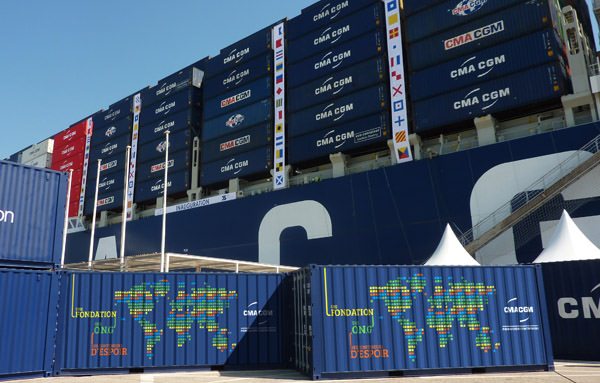
Photo: tommy.lan