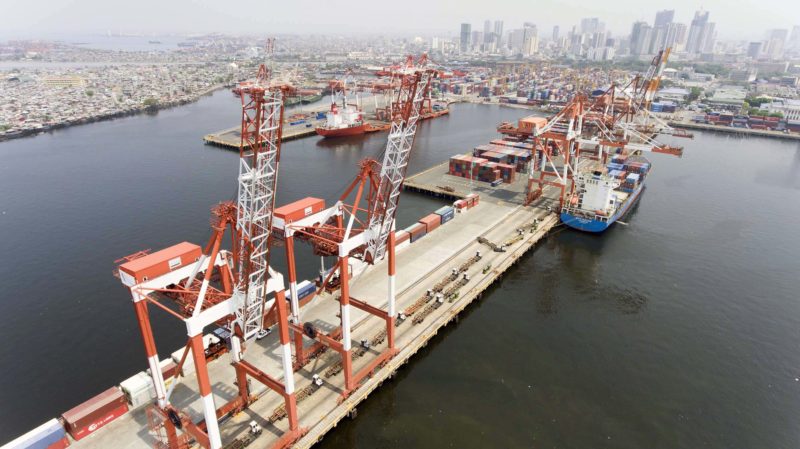
The  (Marina) has finally completed formulating the eight priority projects under the 10-year Maritime Industry Development Plan (MIDP). The projects include development of shipping services for maritime tourism; development of a coastal and inland waterways transport system; and development of the Philippines as a global maritime hub.
In an external stakeholders’ validation workshop held last December 11, Marina officer-in-charge administrator Narciso Vingson, Jr. presented an overview of Marina’s initiatives under the MIDP, which will be achieved through developing and supporting an organizational culture and practice of leading in maritime education, innovation, technology, and sustainability.
“The formulation of MIDP 2019-2028 is a participatory process, enabling us to deeply understand the present conditions of the maritime industry and draw up a comprehensive long-term plan for its sustainable growth and development,” Vingson said.
MIDP 2019-2028 is the first comprehensive effort that aims to understand and address the core problem of the Philippine maritime sector, and the underlying causes of the core problem, in order to plan and implement more responsive programs that meet the demands of the maritime industry, successfully address key challenges, and lead to the seizing of opportunities both in the domestic and global arena. Under Presidential Decree (PD) No. 474 (Maritime Industry Decree of 1974), the maritime agency should create master plans for the industry. The last 10-year roadmap created by Marina was in the 1980s.
The MIDP formulation process, officially launched in June 2017, followed two phases. One consisted of “sector assessment” that encompassed the conduct of road-mapping workshops on and analyses of stakeholders, problems, objectives, and alternatives based on a logical planning framework approach. The other was about “participatory planning,” which included definition of sector goals and objectives, priority program identification, results framework development for each of the programs, and validation workshops, with the external validation as the final process.
The entire process was guided by relevant national legislation and plans, particularly PD 474, the National Economic and Development Authority’s long-term development plan Ambisyon Natin 2040, the Philippine Development Plan 2017-2022, Sustainable Development Goals 2030, and international and regional commitments of the government to the maritime sector.
The eight flagship programs under the MIDP are: upgrading of domestic shipping in support of the nautical highway development; development of shipping services for maritime tourism; development of a coastal and inland waterways transport system; strengthening of safety standards of Philippine-registered fishing vessels; development of the Philippines as a global maritime hub; enhancement of maritime safety in the Philippines; modernization of maritime security in the Philippines; and the establishment of a maritime innovation and knowledge center.
Vingson noted that the developments and programs under the MIDP mean positive things for the Philippine maritime industry, as the agency and all the stakeholders strive to reform, revitalize, and innovate for the future.
In a chance interview with PortCalls on December 14, Vingson said MIDP is a continuing program, with implementation of some of the projects already ongoing, such as the modernization of the country’s domestic fleet. – Roumina Pablo