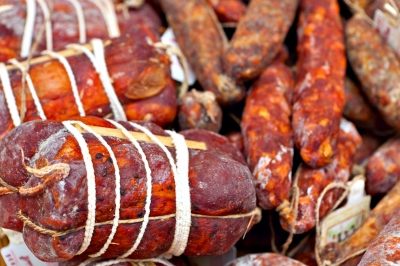

The Bureau of Customs (BOC) said the export commodity clearance (ECC) from the Food and Drug Administration (FDA) is not required for processed meat unless otherwise needed by the country of destination.
The clarification is contained in Customs Memorandum Circular (CMC) No. 12-2019 dated January 8 and signed by Customs Commissioner Rey Leonardo Guerrero on January 11 and issued to all BOC officials and exporters “for purposes of transparency and trade facilitation.” It is also in pursuant to FDA Circular 2016-013.
FDA Circular 2016-013, issued in August 2016, provides guidelines for the joint FDA-National Meat Inspection Service (NMIS) Administrative Circular No. 02 on the transfer of functions in the regulation of processed meat.
Under number 7 of the circular, a company “shall only secure Export Commodity Clearance from FDA prior to the exportation of processes meat, as required by the country of destination.” This was after the issuance of Official Meat Inspection Certificate of the NMIS had ceased after September 30, 2016.
FDA noted that it shall still avail of the services of NMIS Laboratory for testing prior to issuance of the ECC.
Guerrero also reminded BOC officials to continuously refer to the Revised List of Prohibited and Regulated Products for Export.
Meanwhile, BOC is also implementing the latest directive of the Department of Agriculture (DA) banning the importation of pork and pork-related products from countries affected by the African swine fever (ASF). These include Belgium, China, Hungary, Latvia, Poland, Romania, Russia, and Ukraine.
All concerned BOC officials were directed to coordinate with Bureau of Animal Industry personnel in all international air and sea ports for the conduct of rigid inspection, especially on the checked-in and hand-carried luggage of all incoming passengers from ASF-infected countries, and to confiscate all pork and pork-related products coming from these countries within 24 hours of interception.
Importers and exporters may also check the list of requirements and procedures needed to clear their regulated goods from BOC in the Philippine National Trade Repository (PNTR), which now has an updated Customs Regulated Imports List (CRIL).
CRIL lists more than 7,000 regulated import products, their corresponding import regulations, and the permits required by relevant trade regulatory agencies. Released on April 6, 2015, the list was first created by BOC, assisted by the United States Agency for International Development, during the time of former customs commissioner John Sevilla.
Assessment and Operations Coordinating Group (AOCG) deputy commissioner Atty. Edward James Dy Buco earlier said that with CRIL, stakeholders and customs frontliners have a uniform list of permits needed from a trade regulatory agency for clearing a regulated import shipment. He said CRIL addresses the previous problem of frontliners having to ask for additional permits, which may not be needed in the first place, as well as the delays in processing of import shipments. Dy Buco also noted that with a single listing, debates between customs personnel and stakeholders regarding the required permits for a commodity can finally end.
Before CRIL was created, importers and traders of regulated products were in the dark as to what permits to apply since no single source of information regarding this was available. – Roumina Pablo