 Singapore has introduced two initiatives to strengthen its maritime industry—the Singapore War Risks Insurance Conditions (SWRIC) and the development of an inter-operability framework for electronic trade documents for the maritime and trade industries.
The SWRIC is an enhancement to the Singapore War Risks Mutual (SWRM), Singapore’s first national war risks insurance facility which was launched in 2015 as part of efforts to develop Singapore as a comprehensive marine insurance hub.
Available to members of the Singapore Shipping Association (SSA) irrespective of the flag of the ship and to non-members whose ships are registered in Singapore, the cover under SWRM rules includes Protection and Indemnity (P&I) war risks, hull war risks, detention and diversion expenses, and sue and labor and discretionary insurance.
In just four years since its launch, the SWRM cover has exceeded expectations with close to 800 ships insured, said the Maritime and Port Authority (MPA) of Singapore and SSA in a joint statement.
To augment the SWRM, an SSA work group prepared the SWRIC, a comprehensive set of insurance conditions which aims to raise the bar on existing war conditions in the marketplace today by bridging coverage gaps as well as updating and simplifying the existing war conditions available in the market.
The SWRIC is also the first set of insurance conditions to be written from a shipowner’s perspective, addressing important risks that are felt by the global shipping community. Local expertise will be developed to ensure that the conditions are updated and remain relevant to the industry, said the statement.
The other initiative aims to bolster digitalization of electronic Bills of Lading to facilitate inter-operability across more digital solutions. The MPA said it is galvanizing the shipping community and other government agencies to develop these inter-operability enablers.
“This is a step-up to the three-party Memorandum of Understanding (MOU) that MPA, SSA and Singapore Customs signed at the Sea Transport Industry Transformation Map launched in January 2018 to jointly look into the digitalisation of trade and maritime documentation, such as Bills of Lading (BL), in the industry,” said MPA.
Since the signing of the MOU in January 2018, the industry has seen progress with successful e-BL trials among consortiums led by two shipping lines—one by APL and the other by PIL and IBM. The trials simplify existing processes as well as leverage blockchain technology to bring various trading parties together to support information sharing and transparency.
To facilitate inter-operability of the solutions developed by the various consortiums, the members have included a new MOU partner, Info-communications Media Development Authority (IMDA), to develop a new inter-operability framework, the statement continued.
Working together with IMDA, which leads Singapore’s digital transformation with infocomm media, the industry can expect to see different digital ecosystems inter-operate seamlessly with efficient exchange of electronic trade documents, said the release.
The work will entail developing a set of governance and legal frameworks, technical standards and inter-operable digital enablers.
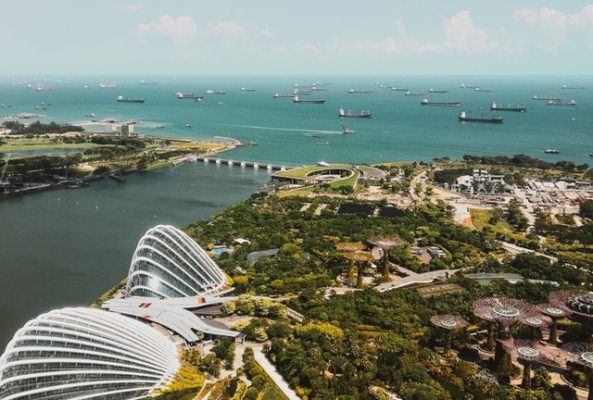
Photo: Ingo Joseph from Pexels





