Cargo volume handled by Philippine ports grew 1% to 256.326 million metric tons (mt) in 2018 from 253.561 million mt in 2017 as both domestic and foreign cargoes recorded slight increases, according to preliminary data from the Philippine Ports Authority (PPA).
Of the total 2018 cargo volume, 60% were foreign cargoes, which inched up 0.9% to 153.369 million mt from 152.064 million mt in 2017.
Imports increased 10.8% to 99.334 million mt in 2018 from 89.612 million mt in 2017. Exports, on the other hand, declined 13.5% to 54.034 million mt from 62.452 million mt.
Domestic cargoes, meanwhile, rose 1.4% to 102.958 million mt from 101.497 million mt in 2017.
PPA general manager Atty. Jay Daniel Santiago earlier said he was optimistic of volume increase in 2018 due to continuous high consumption, imports for the government’s infrastructure projects, and shipments related to the holidays last year.
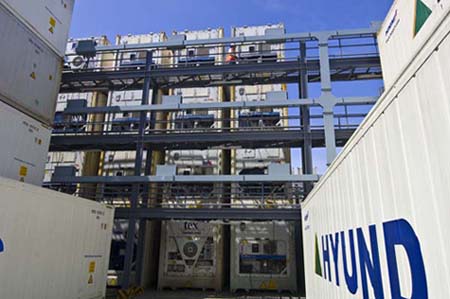
Container traffic in 2018 reached 7.539 million twenty-foot equivalent units (TEUs) last year, up 7.5% from 7.014 million TEUs in 2017. Foreign boxes improved 6.7% to 4.455 million TEUs from 4.174 million TEUs, while domestic containers increased 8.6% to 3.084 million TEUs from 2.841 million TEUs.
PPA in 2018 recorded 465,654 shipcalls, up 3.7% from 449,008 shipcalls in 2017.
Of the total, domestic shipcalls increased 4% to 454,342 vessels from 437,054 vessels in 2017. Foreign shipcalls, on the other hand, decreased 5.4% to 11,312 vessels from 11,954 vessels in 2017.
Roll-on/roll-off (Ro-Ro) traffic in 2018 improved 12.8% to 6.888 million from 6.105 million in 2017. Inward Ro-Ro traffic went up 13.2 % to 3.464 million from 3.060 million while outward traffic grew 12.5% to 3.424 million from 3.045 million.
Passenger traffic likewise rose in 2018, reaching 76.35 million, 5.4% higher than the 72.439 million passengers in 2017. Of the total, cruise passengers accounted for 379,958, a jump of 243.7% from 110,539 in 2017.
Cruise tourism has been robust in the Philippines for the past few years, prompting the government to develop, for cruise liners, international hubs like Surigao, Ilocos Norte, Bohol, Boracay, Metro Manila, and Palawan, which make up the nation’s major nautical cruise arteries. PPA earlier said it has also lined up various port programs to develop cruise terminals in these areas. – Roumina Pablo