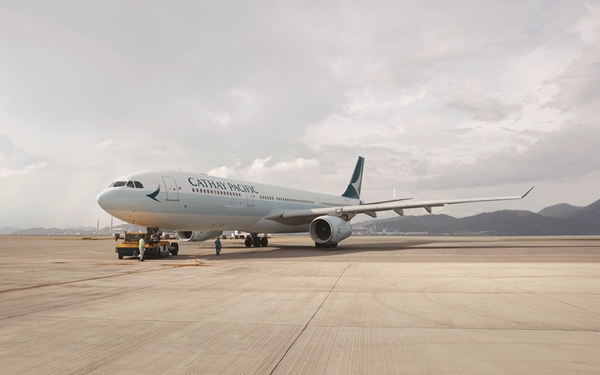

 Hong Kong International Airport (HKIA) continued to register an increase in passenger volume in January 2019, but saw cargo throughput fall in the same period. A similar pattern was indicated by figures released by Cathay Pacific Group.
During the month, HKIA handled 6.5 million passengers, representing year-on-year growth of 6%, while cargo throughput dropped 4.2% to 401,000 tonnes compared to the same month last year, according to Airport Authority Hong Kong.
The growth in passenger volume at the airport was mainly attributed to an 8% rise in transfer/transit traffic and a 7% increase in visitor traffic. Passenger traffic to and from China and Japan recorded the most significant increases. Hong Kong resident travel also grew by 2% during the month.
Uncertain global economic conditions contributed to decreases in cargo volume in January. Imports and transshipments were impacted the most, registering 8% and 6% year-on-year drops, respectively. Among key trading regions, cargo traffic to and from Europe and Southeast Asia decreased most significantly during the month.
Steven Yiu, deputy director of service delivery at Airport Authority Hong Kong, said, “After seeing continued growth in passenger numbers in January, HKIA also experienced a busy Chinese New Year peak travel season.”
On a 12-month rolling basis, passenger volume grew by 3.1% to 75 million, while cargo throughput recorded 5.1 million tonnes, rising 0.4% year-on-year.
Cathay Pacific’s January performance
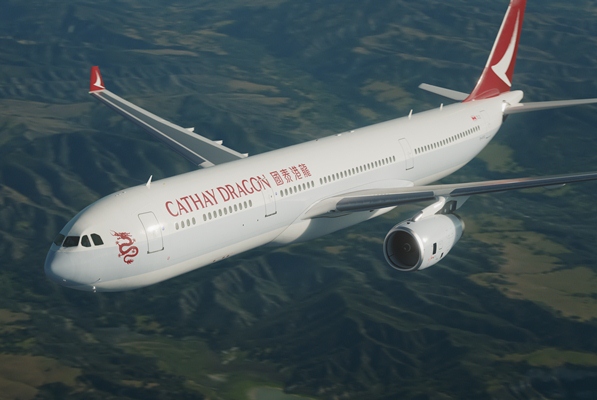
Meanwhile, combined Cathay Pacific and Cathay Dragon traffic figures for January 2019 show an increase in the number of passengers carried and a decrease in cargo and mail uplifted compared to the same month in 2018.
The sister airlines carried a total of 3,127,437 passengers last month, an increase of 7.4% compared to January 2018. The passenger load factor increased 1.9 percentage points to 86.1%, while capacity increased by 7.1%.
The two carriers carried 166,735 tonnes of cargo and mail last month, a decrease of 3.4% compared to the same month last year. The cargo and mail load factor fell by 3.8 percentage points to 61.6%. Capacity increased by 0.8% while cargo and mail revenue freight tonne kilometers decreased by 5.2%.
Cathay Pacific director for commercial and cargo Ronald Lam said: “Chinese New Year this year was earlier than last, leading to a slight distortion in both passenger and cargo revenue for January and February.”
He added: “Passenger revenue performed well with positive year-on-year growth in terms of load factor and yield. The robust Business Class demand of late 2018 continued into January, while we also saw improved volumes in Economy Class, driven by pre-Chinese New Year traffic from Hong Kong and mainland China.”
As for cargo, volume uplift gradually picked up before Chinese New Year but the pre-holiday rush was not as strong as last year. As a result, cargo revenue recorded small negative year-on-year growth in January.