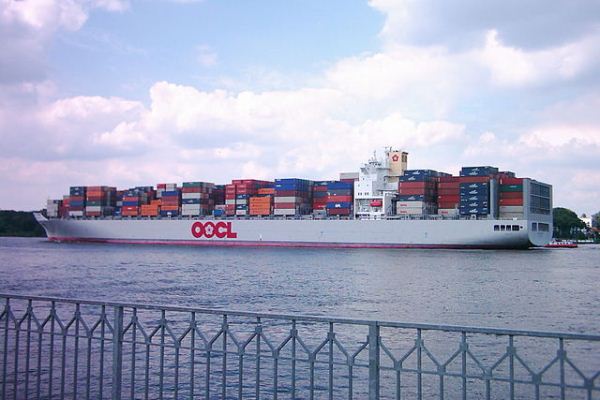
 Orient Overseas (International) Limited (OOIL) announced a lower profit for 2018 even as revenue and operating profit increased.
In a statement on March 25, OOIL said profit attributable to equity holders for 2018 was US$108.2 million compared to a profit of $137.7 million in 2017.
Group revenue was $6.573 billion, up from $5.982 billion the previous year, while group EBITDA amounted to $663 million from $667 million for the preceding year.
The company said 2018 was a landmark year for the group. In July, COSCO SHIPPING Holdings successfully acquired OOIL, with the new combined group stepping up in terms of total capacity and joining the top three in the industry.
As at the end of 2018, the combined group operated a fleet comprising 477 container vessels with total shipping capacity of 2.76 million TEUs, and had an order book of nearly 180,000 TEUs.
OOIL’s container carrier OOCL and COSCO Holdings’ COSCO SHIPPING Lines cooperated closely with each other to explore and gradually to achieve synergies in a number of areas, including fleet and network planning, procurement, container management, IT, commercial coordination and marine operations.
In the second half of 2018, both companies recorded good operating results. The “dual-brand” strategy also provides a bigger and stronger platform for OOCL to further enhance its competitive advantages.
Looking back to 2018, the global economy continued to recover, but growth momentum slowed down, said the statement.
“Several negative economic factors, such as the concentration of vessel deliveries in the first half of the year, the significant rise of the oil price, and escalating trade frictions, resulted in a decrease in the overall financial performance of the container liner industry as compared to 2017, especially in the first half of the year,” it said.
During the year, the group took delivery of the sixth (and the last) of a total of six ‘Giga’ Class 21,413-TEU vessels from the Samsung Heavy Industries Shipyard in South Korea. No order for new buildings were placed during the year.
OOIL said that as it approaches the end of the second year of operation with the Ocean Alliance, “we can clearly feel the benefits that alliance membership brings in terms of network planning, network scope, vessel utilisation and the management of business risk.” It said that with plans for the third year of the alliance’s operation already well advanced, it looks look forward to further benefit.
On the container shipping business, it said that as with 2017, last year was a year of strong growth for OOCL, especially in the Asia-Europe and Trans-Pacific trades.
For the full year 2018, OOCL’s liftings were up 6.3% overall, rising to 6.697 million TEUs from 6.299 TEUs in 2017. However, liftings reached 8.9% on Trans-Pacific and 14.5% on Asia-Europe. For the second year in a row, this growth outpaced the volume growth seen in the market as a whole.
“OOCL continues to have a strong focus on Intra-Asian trades as well as playing a leading role in other global trades such as the Trans-Pacific. We continue to develop market opportunities in Intra-Asia, Intra-Europe and other regional trades, and are working closely with COSCO SHIPPING Lines to participate fully and effectively in the Belt and Road Initiative,” it said.
OOIL’s container transport and logistics business reported EBIT of $210 million, up from $111 million in 2017. Operating margin for 2018 was about 3.2%, higher than the 1.9% posted the preceding year.
“Looking forward to 2019, we are cautiously optimistic about the global economy and the shipping environment as both challenges and opportunities are lying ahead,” said the release.
Challenges include a slowdown in the global economy; the many uncertainties that may negatively affect shipping, including trade frictions, high oil price; and the industry’s supply-demand imbalance.
The favorable conditions and positive factors include the continued stability of the growth drivers of the Chinese economy; a more open China policy; the Belt and Road Initiative; and the slowdown in the capacity growth of container shipping, which may help alleviate the pressure on supply side.
The group will also make continued progress in digital technology, and in the build out of its logistics business, said OOIL.
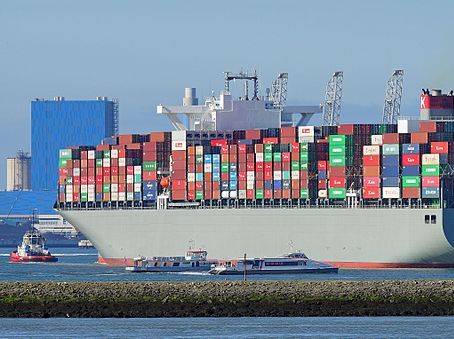
Photo: GeorgHH