 The Bureau of Customs (BOC) has issued guidelines for special cargo clearance procedures for qualified micro and small entrepreneurs importing and exporting goods between the Philippines, Brunei, Indonesia, and Malaysia.
Under Customs Memorandum Order (CMO) No. 32-2019, the customs clearance procedure between the four countries has been simplified to facilitate trade, part of initiatives under the Brunei, Indonesia, Malaysia, Philippines-East ASEAN (Association of Southeast Asian Nations) Growth Area (BIMP-EAGA).
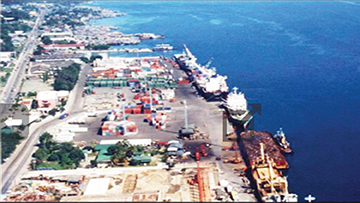
CMO 32-2019, dated July 2 and effective July 15, requires micro and small entrepreneurs to register prior to transacting with BOC. The order specifically covers ports and subports in Mindanao and Palawan.
A micro entrepreneur is an enterprise duly registered with the appropriate government agencies and with a maximum capitalization of P3 million. A small entrepreneur, on the other hand, is a duly registered enterprise with capital of P3 million up to P15 million.
The entrepreneur shall file the application for registration, either as importer or exporter, directly with the district collector, and the application must be accompanied with certified true copies of documentary requirements under CMO 32-2019. In the case of Puerto Princesa, the application shall be filed with the subport collector.
The registration is valid for three years from the date of approval subject to suspension, revocation, or cancellation.
Application for renewal shall be filed within 30 calendar days prior to the expiration period; after that period, the application for renewal will be considered a new application.
Processing of goods declaration for all imports and exports to and from Mindanao and Palawan ports and subports shall be done manually following the procedures outlined in CMO 32-2019, using the informal entry declaration form, regardless of the value.
CMO 32-2019 directs the district or subport collector concerned to create a one-stop shop office within his jurisdiction to expedite processing and clearance of goods within Mindanao and Palawan ports and subports. A specific reference number shall also be used in the goods declaration to indicate that the goods were imported or exported under BIMP-EAGA conditions.
Exports shall be covered by a goods declaration to be electronically lodged by exporters or authorized representatives into BOC’s automated system.
But if electronic lodgement is not available, manual processing of goods declaration for export may be allowed, subject to compliance with customs rules and regulations.
BOC’s Management Information System and Technology Group must provide the necessary IT infrastructure for all trade ports in Mindanao and Palawan, including access of the district or subport collector to the BOC’s Client Profile Registration System to expedite the registration of exporters.
Regulated goods shall be imported or exported only after the necessary goods declaration or export declaration, clearances, licenses, and any other requirements have been secured beforehand. In case of importation, submission of requirements after arrival of the goods but prior to release from customs custody shall be allowed, but only in cases provided for by governing laws or regulations.
Prohibited goods for importation, meanwhile, include written or printed goods in any form containing any matter advocating or inciting treason, rebellion, insurrection, sedition against the government of the Philippines, or forcible resistance to any law of the Philippines, or written or printed goods containing any threat to take the life of, or inflict bodily harm upon any person in the Philippines.
They also include goods, instruments, drugs, and substances designed, intended or adapted for producing unlawful abortion, or any printed matter which advertises, describes or gives direct or indirect information where, how or by whom unlawful abortion is committed.
Also prohibited are written or printed goods, negatives or cinematographic films, photographs, engravings, lithographs, objects, paintings, drawings, or other representation of an obscene or immoral character; any goods manufactured in whole or in part of gold, silver, or other precious metals or alloys and the stamp, brand, or mark does not indicate the actual fineness of quality of the metals or alloys; and any adulterated or misbranded food or goods for human consumption or any adulterated or misbranded drug in violation of relevant laws and regulations.
Goods with FOB (free on board) or FCA (free carrier) value of P10,000 or below, or classified as de minimis importations, are entitled to immediate release, according to CMO 32-2019.
Provisional goods declaration may be allowed in order to facilitate trade and to prevent goods from being declared abandoned, CMO 32-2019 states.
BOC shall assign a specific code to indicate that the goods declaration is provisional in nature upon lodgement. Goods declaration shall be considered full and complete insofar as supporting documents and information are concerned if the declarant does not indicate the provisional nature of such lodgement.
Under CMO 32-2019, lodgement of provisional goods declaration may be allowed when no regulatory permit, clearance, or license has been presented at the time of lodgement, provided the importer has filed his application for such permit, clearance or license before the goods departed from the country of origin, or before the goods arrived in the Philippines, depending on the policy of the concerned regulatory agency.
Lodgement of provisional goods declaration may also be allowed for any other situation where the declarant lacks certain information or document to make a complete goods declaration, “provided it is not due to the declarant’s negligence or fault.”
Under CMO 32-2019, a person may import or export, or bring with him into the country or take out of the Philippines local currency with an amount not exceeding P50,000 without prior authorization from Bangko Sentral ng Pilipinas (BSP). Amounts exceeding the threshold shall require prior written authorization from BSP.
On the cross-border transfer of foreign currency, there is no restriction or limit to what a person may bring into or take out of the Philippines. Cross-border transport of foreign currency-denominated bearer monetary instruments in excess of US$10,000 or its equivalent in other foreign currency must be declared in writing using BOC’s prescribed declaration form.
BIMP-EAGA was first established in 1994 as a shared strategy among its member countries to accelerate socioeconomic development in the less developed and geographically remote areas in the subregion. The initiative takes a public-private approach, with the private sector serving as the engine for growth and its public counterpart acting as its enabler. – Roumina Pablo