
 Swiss-based international forwarding and logistics company Panalpina recorded a decrease in profit in the first half of 2019 due to lower margins in air freight and lower volumes from the automotive sector.
From January to June 2019, Panalpina generated an EBIT of CHF52.1 million (US$53 million), down 5% from CHF54.7 million in the same period last year, and a consolidated profit of CHF34.0 million, down 6% from CHF36.1 million posted in the first half of 2018. Gross profit decreased 4% to CHF716.4 million from CHF744.4 million previously.
“After it was announced that Panalpina and DSV would join forces, our competitors went more aggressively after our business in the second quarter, but we stood our ground,” said Panalpina CEO Stefan Karlen.
“The decrease in gross profit was chiefly the result of lower margins in air freight and lower volumes from the automotive sector, which shifted into reverse gear. Nonetheless, group EBIT and profit almost reached last year’s levels. Given these circumstances, our stable half-year results are a respectable achievement.”
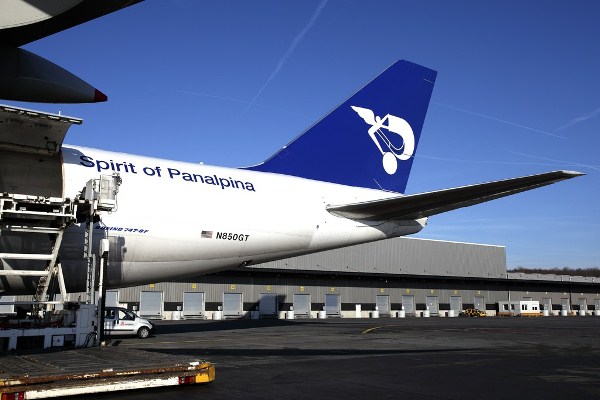
By segment, air freight volumes increased 5% in the first half of 2019. Compared to the same period last year, gross profit per ton decreased 9% to CHF659 from CHF725, while overall gross profit decreased to CHF337.2 million from CHF354.6 million year-on-year. Substantially lower volumes in the automotive sector led to the decline in gross profit. EBIT in air freight decreased from CHF53.4 million to CHF38.4 million. The EBIT-to-gross-profit margin came in at 11.4%, compared to 15.1% the year before.
“The ongoing trade conflict between the U.S. and China has clearly not helped the air freight market,” said Lucas Kuehner, global head of air freight. “We must also not forget that we are comparing against an exceptionally strong first half-year of 2018. A comparison with the first half-year of 2017 gives a more realistic picture. Compared to 2017, our unit profitability was better and EBIT stable.”
But Kuehner noted that compared to 2017 when the market got stronger with every quarter and rates increased accordingly, the market in 2019 is heading in the opposite direction.
“Volumes have been going down, especially in the automotive sector, which has shifted into reverse gear. Decreasing air freight volumes translate into falling rates and this has put pressure on margins. In the current market environment, it is difficult to achieve last year’s performance,” he continued.
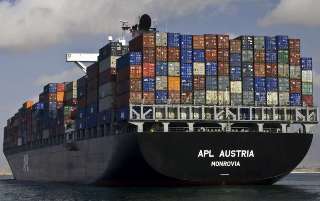
Ocean freight volumes decreased 3% year-on-year and gross profit per TEU increased slightly to CHF300 from CHF299 year-to date in 2018, bringing gross profit to CHF215.9 million, down from 2018’s CHF220.9 million. For the first half of 2019, ocean freight recorded an EBIT of CHF5.5 million compared to a loss of CHF5.5 million the year before.
Peder Winther, global head of ocean freight, said the tensions between the U.S. and China have also cast a cloud over box shipping, as global ocean freight market decreased 2% in the first quarter of 2019 and stagnated in the second quarter.
“But while our volumes decreased 3% in the first six months of the year, we sustained a healthy unit profitability.”
He explained: “Gross profit per TEU increased from CHF 296 in Q1 to CHF 304 in Q2. We also generated CHF 1 million more gross profit in the second quarter compared to the same period last year. And even more encouragingly, we turned a CHF 5.5 million EBIT loss into a positive EBIT of CHF 5.5 million for the first six months of the year, thanks to strong cost control and yield improvement.”
In logistics, gross profit decreased 3% to CHF163.3 million year-on-year from CHF168.8 million due to seasonality and the downturn in the automotive and technology sectors.
Nonetheless, the division successfully expanded its logistics manufacturing services and in the second quarter achieved the highest quarterly EBIT ever, said the company. EBIT reached CHF8.1 million for the first half of 2019, compared to CHF6.8 million for the same period last year.
“In a highly uncertain macroenomic and political environment, and against the backdrop of contracting air and ocean freight markets, we will continue to provide our sought-after expertise to existing and new customers,” said chief executive Karlen.
Photo courtesy of Panalpina