
Chelsea Logistics and Infrastructure Holdings Corp. (CLIHC) posted a 14.7% decline in net income for the first half of 2019 to P361 million from P308 million year-on-year owing to higher finance costs and depreciation and amortization due to its expansion program.
CLIHC president and chief executive officer Chryss Alfonsus Damuy said the group is optimistic the numbers will improve with the expansion program that includes addition of new and younger vessels, and with the expected turn-around to net income of 2GO Group, Inc. in the second quarter. CLIHC has a 28.15% indirect economic interest in 2GO.
Revenues for the first half of the year reached P3.5 billion, up 28% from P2.7 billion in the same period last year.
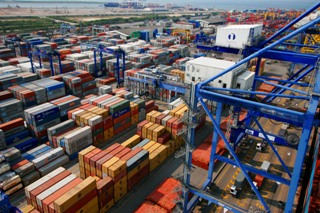
The logistics business recorded the biggest revenue growth of 75% to P223 million from P128 million last year, accounting for 7% of total consolidated revenues. The group said the growth was the result of its continued expansion program to increase its warehouse capacity and trucking fleet. CLIHC said the logistics segment is expected to further improve once the group’s warehouse complex located on a 2.5-hectare property in Taguig City starts commercial operations in 2020.
Revenues from shipping services, which generated 90% of the total revenues, likewise improved 26% to P3.27 billion revenues.
Tankering revenues (consisting of charter fees and standby charges) rose 26% to P1.215 billion from P966 million primarily from operations of MT Chelsea Providence, the group’s medium-range tanker. In addition, utilization of other tankers increased with higher volume of petroleum products shipped during the period.
Similarly, revenues from the freight segment grew 21% to P1.032 billion from P855 million, while passage revenues rose 34% to P733 million from P545 million.
CLIHC attributed growth in freight and passage revenues to operations of MV Stella Del Mar, MV Salve Regina, and MV Trans-Asia 19, which ply Roxas-Caticlan, Batangas-Caticlan, and Cebu-Tagbilaran-Cagayan de Oro routes, respectively.
Tugboat revenues, on the other hand, declined 9% for the six months of 2019 to P163 million from P179 million year-on-year due to drydocking of tugboats operating in Batangas and Davao.
“We are very pleased to see each business segment showing robust growth. The second half of 2019 also witnessed our team’s hard work in closing strategic partnerships with world-class companies such as Kumiai Senpaku Co. Ltd., one of the biggest independent Japanese ship owners, and Fukuoka Shipbuilding Co. Ltd., a renowned Japanese shipbuilder,” Damuy said.
“Our shipbuilding agreements with Kumiai and Fukuoka, which are in addition to our existing partnership with Kegoya Dockyard, Inc., will result in the delivery of two brand-new passenger ferries in April 2020 and June 2021 respectively,” he added.
Cost of sales and services, meanwhile, increased 38% to P2.308 billion from P1.674 billion previously, driven by increases in bunkering costs, depreciation and amortization, crew salaries and employee benefits and insurance, as a result of additional vessel deployments for the period.
In addition, delivery costs and outside services increased by 65% and 159%, respectively, as a result of the significant increase in volume of delivery services for the group’s logistics business.