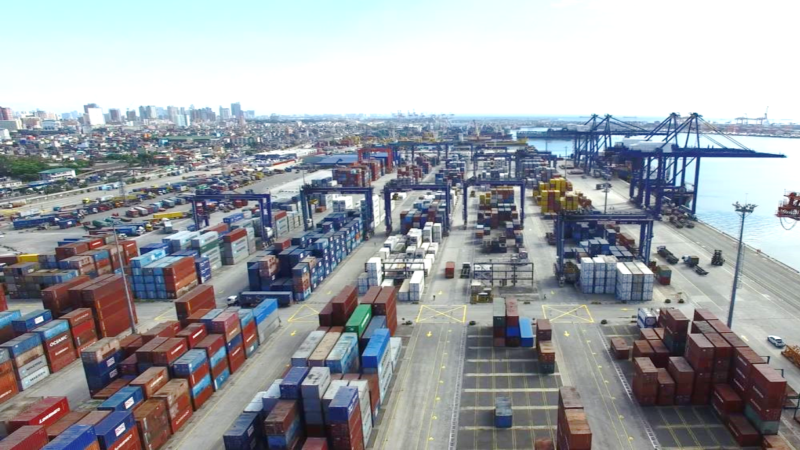
THE South Harbor and the Manila Harbor Center should switch places to maximize growth and port potential, decongest traffic as well as protect national heritage. This idea is being pushed by former Philippine Ports Authority general manager and now Maritime Industry Administrator Vicente Suazo, Jr. in a study titled Boulevard 2000.
The proposal champions the conversion of South Harbor into Manila’s ecotourism area and the areas of North Harbor up to the privately-owned Harbour Centre Port Terminals, Inc into the country’s all-port services.
“This set-up will be more business friendly as all-port services will be concentrated on one side and economic and tourism on the other and these two will be divided by the Pasig River,” Suazo explained.
The proposal is, however, not exactly new and has been collecting dust for almost a decade now until the administration this year showed interest.
“The land-swap scheme will significantly reduce traffic in the city as ports, all lined up on the North side, will have access to major road networks such as C-2, C-3 and C-5; (there will also be) no truck bans (and there is a) provision for (a) railway system that will definitely increase transit time for both North-bound and South-bound traffic,” Suazo said.
“Also, domestic and international operations are interconnected, greatly increasing efficiency at the ports. (The project) will also open operations to intermodal transport,” Suazo added.
“This is like the set-up of Hong Kong, wherein all their port services are located in adjacent areas and the business district is concentrated on the other side of the region,” Suazo explained.
Based on the plan, an additional 150 hectares of the 279-hectare Harbour Centre require development by the present owners. South Harbor also needs to be developed, particularly its road network.
According to Suazo, both South Harbor operator Asian Terminals, Inc and Harbour Centre are amenable to the idea of a land swap as long as their investments are protected.
Suazo will present Boulevard 2000 to the National Economic and Development Authority, the Department of Transportation and Communications and, eventually, to the Office of the President.
With enough will, Suazo said the project could be completed in three to five years.