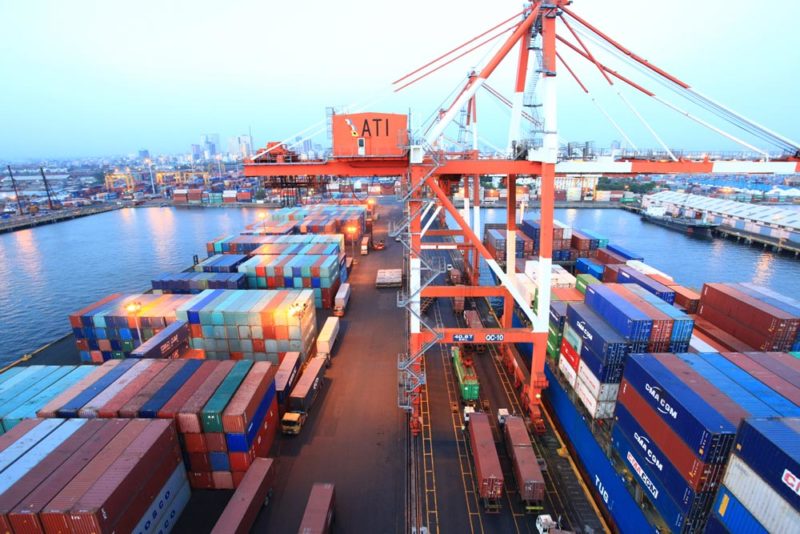
SHIPPERS from southern Philippines want the government to immediately reduce if not abolish the terminal handling charge (THC) being billed by international shipping lines.
The Mindanao Federation of Shippers Association (Minfesa) and the Philippine Exporters Federation in Mindanao in a paper said the continuous imposition of the THC is eroding the competitiveness of Philippine products.
The shippers’ stance is hinged on a Philippines Shipper’s Bureau study which found that most THC components are either redundant or a “double charge”.
“We urge the Department of Trade and Industry (DTI), together with the Maritime Industry Authority and the Philippine Ports Authority to immediately craft a law reducing or abolishing the THC as Mindanao shippers for many years have bear the brunt of paying higher shipping costs to and from Manila and overseas destinations,” the group said.
“The imposition of THC by shipping lines and conferences was made without prior consultations with shippers and/or shippers’ councils/group. Even when shippers vigorously demanded for such consultations or discussions, none took place,” it stressed.
The THC for the Philippine-US trade, they said, was $70 per TEU in 1988 but this has gone up to $104 by 2006.
Government figures, on the other hand, showed that the THC has cost Philippine shippers approximately $130 million to $200 million per year. This has increased at an annual average rate of 8% (under the Transpacific Stabilization Agreement), 10%-12% (Far Eastern Freight Conference) and 24% (Intra-Asia Discussion Agreement) with no formal announcement and notice among shippers.
THC accounts for 30%-50% of the shipping cost of the Philippine-ASEAN and East Asian container trade, the government said.
Minfesa said the Trade Secretary, by virtue of an executive order which authorized his department to implement programs geared towards the overseas promotion of Philippine exporters, has the power to adopt policies that would lead to the abolition and/or reduction of THC.
The DTI will soon form an oversight committee to police charges billed by international carriers. This follows results of a study that pointed to carriers as the reason for high shipping costs, a charge denied by the lines.