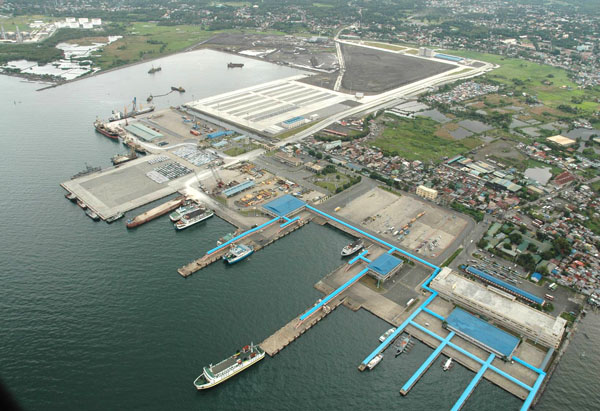
 It is the best port in the country, was how Philippine Export Zone Authority (PEZA) director general Lilia de Lima described the newly modernized Batangas Port. And yet, the port, two hours south of the capital Manila, is little used.
“We are now working for its full use. Give us the volume needed to lure in the international shipping lines and we will produce that volume,” the PEZA boss added.
Her bold dare was to break what she called a chicken-and-egg situation confronted by the port. Shipping lines, she explained, refuse to call the port due to lack of volume while manufacturers in the region do not use the port because there are no ships that regularly call port.
The PEZA official gave her message at a seminar on making the southern Luzon port more useful. This was organized by the Japan International Cooperation Agency last week.
De Lima noted a breakthrough was, however, reached when starting last January, MCC Transport, a wholly owned subsidiary of the A.P. Moller-Maersk Group, started weekly calls at the port, sailing out to Asian destinations every Saturday.
De Lima said port managers and those providing support services are busy working out a system that would halve all port fees until end of the year to hasten full use of the port.
The original discount set last January is to last only until June.
She further revealed three new big Japanese manufacturing companies including Brother and Canon have set up their manufacturing plants in special economic zones in the Cavite-Laguna-Batangas-Rizal-Quezon region and will be ready to ship their goods from the area by next year.
Another company, British Aerospace, has located its airplane parts factory in the same region.
Nestle testified its two manufacturing plants based in Laguna and Batangas import raw materials and export finished goods through Batangas, translating to much savings on time and trucking costs. The use of Batangas allows Nestle trucks to make three trips to the port a day.
Managed by Asian Terminals Inc (ATI) Batangas Inc, a subsidiary of South Harbor operator ATI, Batangas Port boasts of passenger, cargo and international container terminals. The latter is equipped with two ship-to-shore cranes and other modern cargo-stacking equipment. It has an annual throughput of 400,000 twenty-equivalent units.
Earlier, the Export Development and National Competitiveness Councils initiated calls for exporters in Southern Luzon to use the Batangas Port as part of the strategy to decongest Metro Manila.
The same call was made to exporters from Northern Luzon to use the Subic Bay Freeport which is also underutilized.
Photo from http://www.pdosoluz.com.ph/category/pmobatangas/batangas_baseport