
 Hacis (Hong Kong Air Cargo Industry Services Limited), the road feeder and added-value services arm of Hactl, is equipping all of its air cargo road feeder vehicle fleet with the new Intermodal Transshipment Facilitation Scheme (ITFS) system.
Following the mandatory implementation of the Road Cargo System (ROCARS) in November 2011, ITFS was launched by the Hong Kong Customs & Excise Department (C&ED) to facilitate the faster passage of air-land intermodal transhipment cargoes between Hong Kong and Mainland China.
Under ITFS, such cargo will only be subject to one inspection, at either a land boundary control point or the Hong Kong International Airport (HKIA), and Customs clearance is shortened from up to three hours, to under five minutes.
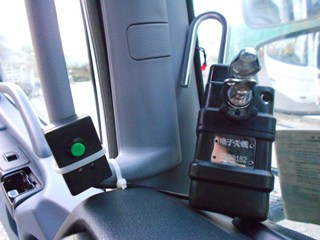
ITFS registration of vehicles involves the fitting of a C&ED-approved GPS transmitter and an “E-Lock”. When the container passes through C&ED’s control points, the vehicle does not need to stop, as E‐Lock readers read its smart identity card, “lock” it and allow it to pass through unless it is selected for Customs inspection. The sealed vehicle can then be tracked via its GPS all the way to destination. To further speed up border processes, dedicated ITFS channels have been established at the Lok Ma Chau and Shenzhen Bay control points.
Hacis will register its whole truck fleet for ITFS. These vehicles operate its SuperLink China Direct scheduled daily express road feeder services, to and from the company’s six inland cargo depots throughout China’s heavily-industrialised Pearl River Delta (PRD) region and Fujian Province.
Kenneth Bell, Managing Director of Hacis, comments: “Hacis’ aim is always to enhance connectivity in the logistics chain. By adopting ITFS for all vehicles operating our SuperLink China Direct services, we are enabling airlines serving Hong Kong to have faster and more secure access to a huge market for exports and imports. This will help them make better use of their cargo capacity, and bring great benefits to the logistics community.
“We look forward to the future implementation of the ‘Quick Pass Mode’ using the same E-Lock and GPS technology, which will allow Customs inspection to take place at destination instead of at the borders. This will further streamline border crossings, to the benefit of all parties in the supply chain.”