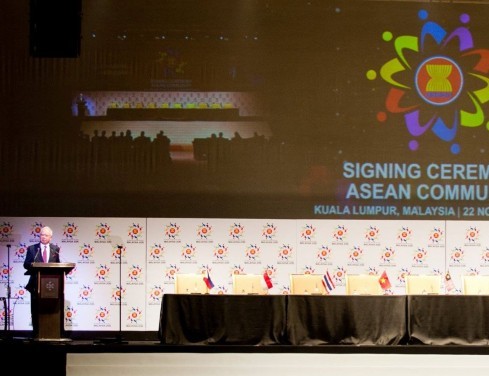

 Leaders of the Association of Southeast Asian Nations (ASEAN) signed on November 22, 2015 a declaration establishing the ASEAN Economic Community, or AEC, by the end of year, in historic ceremonies held in Kuala Lumpur, Malaysia.
The event was staged on the second and final day of the 27th ASEAN Summit and formally creates AEC on December 31. This means ASEAN’s 10 member countries will be a single market and production base from January 1 next year, further opening up the market that has a combined population of 630 million.
All 10 leaders took turns signing the Kuala Lumpur Declaration on the Establishment of the ASEAN Community, which was first signed by current ASEAN chair and Malaysian Prime Minister Najib Tun Razak.
Also inked was the ASEAN 2025 declaration, which outlines the group’s vision for the community over the next 10 years.
Najib hailed the formation of the ASEAN Community as a “landmark achievement” and urged members to accelerate integration. “The region is primed to expand exponentially,” he said.
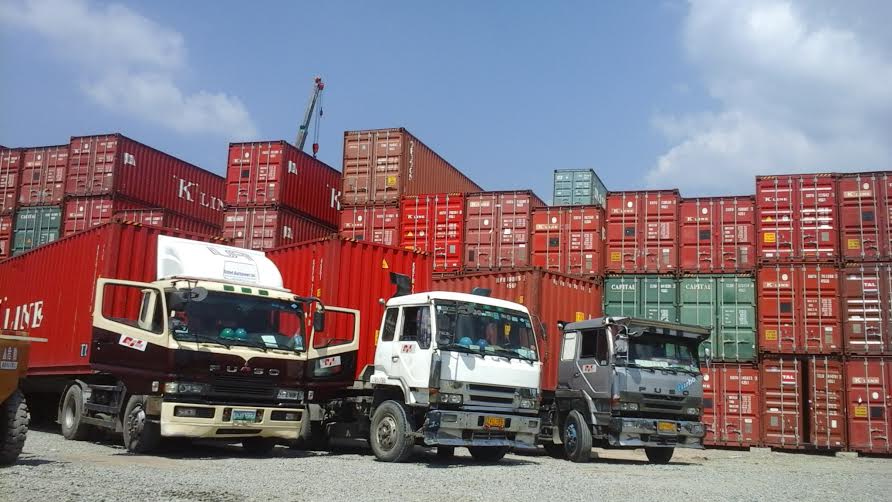
Under the new economic order, majority of products made in the region will have zero tariffs, and there will be freer movement of goods and services that is expected to bring down costs of raw materials and production.
A number of professions, including doctors, nurses, and accountants, will be able to work in any ASEAN member country. In addition, the AEC can tap on a huge consumer market, with half below the age of 30.
The declaration affirms the commitments of the member countries to the ASEAN Charter, reflecting the joint aspiration and will to live in a region of lasting peace, security, stability, sustainable development, prosperity, and social progress.
However, analysts say there is still a long way to go before the AEC becomes fully functional owing to regional diversity. ASEAN covers 10 nations whose people speak different languages and follow diverse faiths, and whose forms of government straddle a broad spectrum, including democratic, military dictatorship, quasi-civilian, authoritarian, monarchical, and communist systems.
The signing of the landmark document was witnessed by leaders of ASEAN dialogue partners from China, Japan, India, Australia, and New Zealand.