 Member economies of the Association of Southeast Asian Nations (ASEAN) can achieve inclusive growth if they can find ways to cope with and take advantage of the transformations brought about by the Fourth Industrial Revolution, according to political and business leaders at the recent 25th World Economic Forum on ASEAN.
The executives recognized the need to quicken the pace at which ASEAN economies adapt to profound technological changes so that the region can benefit fully from opportunities arising from the Fourth Industrial Revolution.
The rapid advances in technology offer opportunities for increasing productivity, creating new business models, and driving fresh growth. But there are deep concerns about those who may be disrupted by the changes, particularly those who are not “digital natives,” a term used to describe young people who were born and grew up in a connected world.
“It is much more difficult to predict the future,” said Sigve Brekke, president and chief executive officer of the Telenor Group in Norway. But it is important to harness the swiftly emerging digital technologies to promote inclusion in all areas including finance, health, education, and agriculture.
Adopting the technologies quickly is crucial, Brekke advised. “This revolution will be much, much faster than any we have seen before.”
That means an intense focus on educating people—both young and old—so that they can cope with the unsettling transformations and the uncertain future.
“The world is changing so rapidly,” Kathleen Chew, group legal counsel of the YTL Corporation in Malaysia, observed. “The goal is to find ways to help students and workers develop skills for 21st-century competence—such as the capacity for collaboration, communications, empathy and openness. People must have the tools and the inclusive environments that will allow them to be creative.”
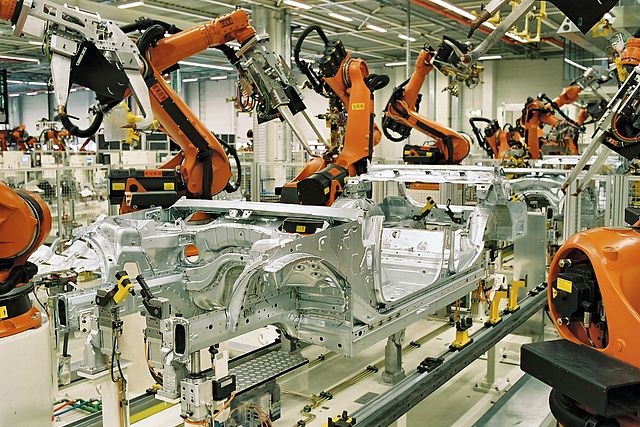
The fourth industrial revolution is about the dominance of the so-called “smart factory” and the use of automation and data exchange in manufacturing technologies. It includes cyber-physical systems, the Internet of things, and cloud computing.
At the forum, political leaders also called for deeper ASEAN integration, arguing that this is a prerequisite for inclusive growth.
Business leaders urged ASEAN governments to push forward the ASEAN Economic Community (AEC) initiative, launched in 2015, and to harmonize their economies, particularly regulations and standards. They were also urged to cut red tape to unleash growth, allow for more trade, and break down barriers to talent development and mobility.
Photo: BMW Werk Leipzig