
 The “Open Skies” policy will bring about real and spill-over benefits to various industries in Southeast Asia if constraints to their implementation in the region are overcome, said a global research and consulting company.
According to Frost & Sullivan, the demand for a well-knit air travel infrastructure system and the increasing demand for low-cost travel are the main drivers for the adoption of open-skies policies in the Association of Southeast Asian Nations (ASEAN) region.
“Many ASEAN countries currently lack comprehensive and well developed ground transport infrastructure and countries in these regions are divided by vast seas, therefore there is a demand for a well-knit, flexible air-transport system.” said Neil Dave, consulting analyst for aerospace and defense at Frost & Sullivan Asia Pacific.
The open-skies agreements are seen to boost economic growth in the region, particularly the electronic goods, trade, and tourism industries.
But they may also adversely affect countries with a developing aviation industry since these countries may be unable to compete with the more mature foreign players.
Dave cautioned, “It is essential to also note the impact that open skies policies can have on the national airline companies.”
He said ASEAN countries must improve their air transport infrastructure and services if they are to survive the impending stiff competition.
There are other issues related to the open-skies policy, such as the potential overcapacity in airports that lack sufficient infrastructure as well as over-congestion of air space from over-utilization and technical delays.
“The management of concerns regarding aviation safety, security, tariffs and fair competition will be fundamentally critical to the succession of open skies policies in the ASEAN region. However, with these kinks and issues ironed out in time, ASEAN as a region can look to benefit heavily from the implementation of these policies,” Dave said.
The ASEAN Single Aviation Market is planned to be concurrently launched with the ASEAN Economic Community in 2015 to provide commonality in aviation safety, security, air-traffic management, and other areas.
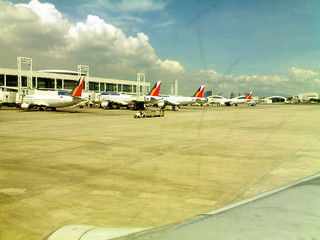
Photo: Ironchefbalara