 Regional airlines of Asia-Pacific posted US$6.9 billion in combined net earnings for the full year 2016, driven by healthy travel demand and an improved cargo market, according to figures released by the Association of Asia Pacific Airlines (AAPA).
Solid growth in passenger demand, coupled with renewed strength in air cargo markets, helped negate yield pressures resulting from stiff competition, while the fall in jet fuel prices countered airline operating costs, explained AAPA.
Last year, Asia-Pacific airlines registered a 6.4% increase in international passenger traffic, measured in revenue passenger kilometer (RPK) terms, supported by continued expansion in network connections.
International air cargo traffic, expressed in freight tonne kilometers (FTK), grew by 1.3%, on the back of a pick-up in export activity in the second half of the year.
Collectively, Asia-Pacific airlines recorded operating revenue totaling $165.3 billion in 2016, a slight 0.3% decline compared to the $165.8 billion achieved in the previous year.
Passenger revenue edged 0.2% lower to $126.4 billion, as lower airfares saw a 5.5% decline in average passenger yields to 7.9 cents per RPK.
Despite volume growth, cargo revenue fell significantly, by 9.8% to $16.2 billion, as air cargo yields declined by 11.0% to 22.9 US cents per FTK.
Combined operating expenses totaled $151.8 billion, unchanged from 2015, said AAPA. Reflecting the significant 17.7% drop in global jet fuel prices to an average of $52.6 per barrel, fuel expenditure fell by 16.8% to $33.7 billion.
As a result, the share of fuel expenditure in total operating costs declined by 4.5 percentage points to 22.2%, while non-fuel expenditure rose by 6.1% to $118.0 billion.
Andrew Herdman, AAPA director general, said Asia-Pacific carriers “achieved another year of respectable earnings in 2016, with an average 8.2% operating margin and net profits of around US$6 per passenger, reflecting the still very competitive market environment.”
He added that the strengthening of the U.S. dollar against many Asian currencies affected revenue performance and increased the burden of dollar obligations for a number of carriers.
Looking ahead, Herdman said, “Continued growth in passenger demand and the pick-up in air cargo markets, with significantly higher load factors during the first quarter, give some cause for optimism for the remainder of this year. However, the operating environment remains challenging, against a backdrop of stiff competition, higher oil prices and other cost pressures.”
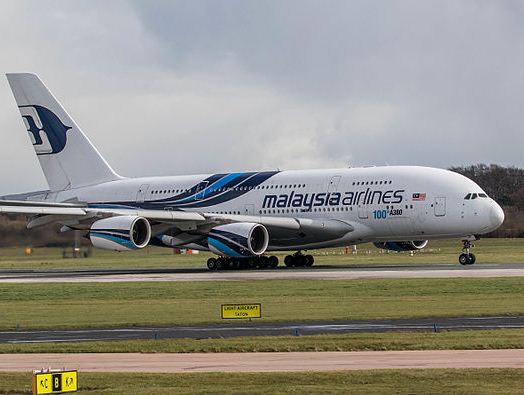
Photo: Russell Lee