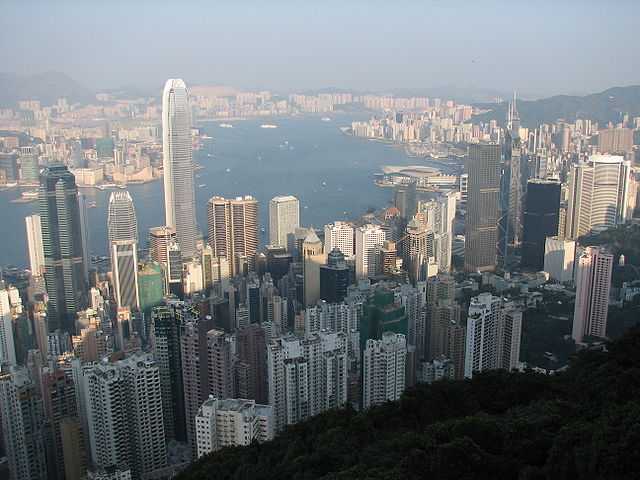

 The Asia-Pacific region has overtaken Europe to become the world’s second wealthiest region and will surpass North America as the wealthiest in 2016, according to a new report by The Boston Consulting Group (BCG).
In BCG’s 15th annual study of the global wealth-management industry, released June 15, the consultancy projects that the Asia-Pacific region (excluding Japan) will surpass North America as the wealthiest region in the world by next year.
It noted that global private wealth grew at a healthy pace in 2014, reaching nearly 12 percent to reach a total of US$164 trillion. North America, with $51 trillion in private wealth, remained the world’s wealthiest region in 2014.
“But for the first time, Asia-Pacific (excluding Japan) overtook Europe (Eastern and Western Europe combined) to become the world’s second-wealthiest region with $47 trillion,” said the study.
With a projected $57 trillion in 2016, Asia-Pacific (excluding Japan) is expected to surpass North America (a projected $56 trillion) as the world’s wealthiest region. Furthermore, the region is further projected to hold one-third of global wealth in 2019.
Over the next five years, total private wealth globally is projected to post a compound annual growth rate of 6% to reach an estimated $222 trillion in 2019.
On wealth by the total number of millionaire households (those with more than $1 million in private wealth), the global figure reached 17 million in 2014, up strongly from 15 million in 2013.
Millionaire households held 41% of global private wealth in 2014, up from 40 percent a year earlier, and are projected to hold 46% in 2019.
The U.S. still had the highest number of millionaire households in 2014 (7 million), followed by China (4 million). Private wealth held by ultra-high-net-worth households (those with above $100 million) grew by a strong 11% in 2014.
Photo: Bullion Vault