 The Asia-Pacific region was the catalyst for the higher volumes transported by air cargo carriers in October, as traffic for the month eclipsed the solid expansion seen in September, according to WorldACD.
Overall September growth in kilograms of around 5% year-on-year was overshadowed by the 6.2% year-on-year growth in October.
The undisputed driver of the October results was Asia-Pacific, in particular the origins China and Taiwan, with year-on-year volume growth of 12% and 19%, respectively, accompanied by a month-on-month yield growth of 12% and 5%, respectively. WorldACD also pointed to the contribution made by the 9% increase in volume from South Korea.
American and European carriers pitched in the most for the 3% month-on-month growth in yields, a higher month-on-month figure for October than in previous years.
“With that yield improvement, October was clearly a good month for air cargo. Actually, the real growth may even be somewhat understated, as October 2016 had less ‘good cargo days’ than October 2015,” said the air cargo market intelligence service.
In terms of direct ton kilometers (DTK), October growth was higher than pure volume growth: 7.4% compared to 6.2%. The DTK is a new concept by WorldACD for measuring volume by multiplying weight with the shortest distance between origin and destination of shipments. The analyst claimed measuring in combined kilograms and DTKs is more indicative of true market development than traditional freight ton kilometer measurements.
“A YoY DTK-growth outpacing year-on-year volume growth proves that shipments were moved (on average) between origins and destinations further apart than the year before. In other words, the 6.2% volume growth was realised more in longer haul than in shorter haul markets,” it declared.
It further stated: “A lot is being said lately about bringing the production of goods nearer to the place of consumption (near-sourcing). Such a trend may well exist, but it is not yet visible in air cargo flows.”
On how other regions fared, South America finally saw yields improve with a volume growth of 3.6% in October year-on-year. The Middle East and South Asia (MESA) and Africa held their own, while the origins Europe and North America were rather flat.
Meanwhile, over the past three months, half of the 36 geographical markets—six intra-regional and 30 inter-regional—contracted year-on-year, while the other 18 expanded. Since expanding markets accounted for 77% of the total business, the report concluded that the “haves” outperformed the “have nots.”
In contrast, among forwarders, the top 20 grew less than the rest, although “by the smallest of margins.” Among the larger markets, Europe to Asia Pacific came out on top, with volume up by 11%. Here the growth came from European and MESA carriers; those from Asia Pacific suffered a small decrease in volume in this market. In one of the world’s largest markets, intra-Asia Pacific, volume grew by 7%, but DTK by only 5%, bucking the worldwide trend for this period.
Worldwide, European carriers as a group performed best (year-over-year volume growth of 6.4% over the last three months), followed by carriers from Asia Pacific (growth of 4.8%).
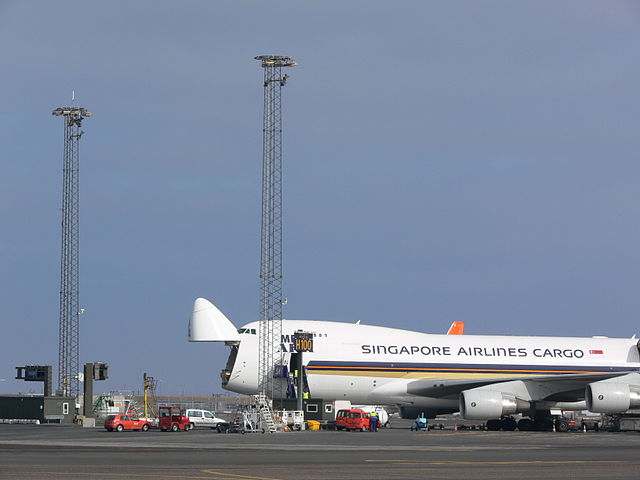
Photo: Larsz